




-
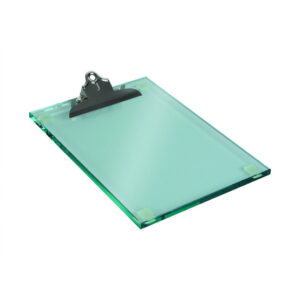 Description Accessories byko-chart Drawdown Plate, Glass Easy to use and clean Holds drawdown cards securely
Drawdown Plate, Glass – Available On Request, Prices in Dollars
₦360.28 -
 Description DRILL GUIDE KIT ONLY (Accessory for Digital X-Stream Flowmeter
Drill Guide Kit Only – Available On Request, Prices in Dollars
₦203.13 -
 Description Drip tray for DK6, DK6/48 (Required Accessories for Kjeldahl Digestion Units – DK6)
Drip tray for DK6, DK6/48 – Available On Request, Prices in Dollars
₦100.37 -
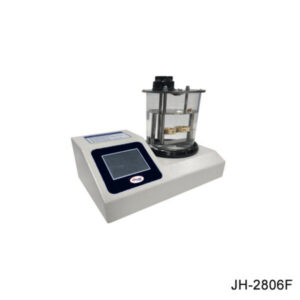 Description Dropping Point Softening Point Titrator JH-2806F Softening point tester perfectly combine high-precision temperature control technology and high-definition video camera technology, not only to provide users with accurate, stable and reliable test results, but also to bring users efficient and convenient test experience. Softening point tester Introduction Innovation: 1: Test two samples at the same time; 2: Linear PID precise temperature control; 3: The stirring rate is continuously adjustable. Softening point tester Feature And Application PID temperature precise control, digital display reading, high accuracy, stable performance, adopt GB8728-88 standard, conform to ASTM, DIN and ISO related standards. Fields of use Softening point tester The softening point tester is widely used to determine the dropping point and softening point of amorphous polymer compounds to determine its density, degree of polymerization, heat resistance and other physical and chemical properties. It is used for coal tar, asphalt, rosin, petroleum jelly, lubricating oil, The composition detection or quality control of synthetic resin and various ointments can replace the traditional Ubbelohde dropping point method.
Dropping Point Softening Point Titrator JH-2806F – Available On Request, Prices in Dollars
₦1,094.25 -
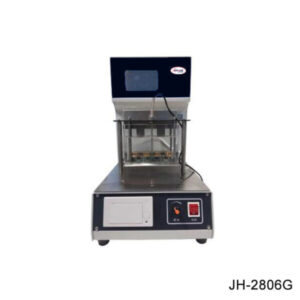 Description Dropping Point Softening Point Titrator JH-2806G JH-2806G Automatic dropping point tester is widely used to determine the dropping point and softening point of amorphous polymer compounds to determine its density, degree of polymerization, heat resistance and other physical and chemical properties. Automatic dropping point tester Introduction Innovation: 1: Test 4 samples at the same time. 2: Linear PID precise temperature control. 3: Fully automatic detection. 4: The speed of the agitator is continuously adjustable. Automatic dropping point tester Feature And Application 1: HD video visual sample changes; 2: Fully automatic one-button automatic measurement; 3. Test two samples at a time; 4: Can print data directly through the printer; 5. Compliance with 21CFR Part 11, audit trail, Pharmacopoeia 2020 and electronic signature; 6: in line with national standards and international standards. Fields of use Automatic dropping point tester It is used for coal tar, pitch, rosin, and petroleum jelly. , Lubricating oil, synthetic resin and various ointment components detection or quality control, can replace the traditional Ubbelohde dropping point determination method.
Dropping Point Softening Point Titrator JH-2806G – Available On Request, Prices in Dollars
₦4,700.25 -
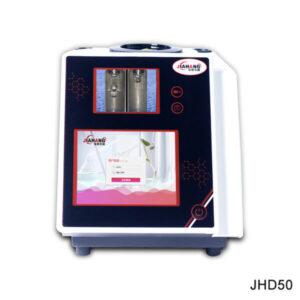 Description Dropping Point Softening Point Titrator JH-D50 JHD50 Automatic softening tester can provide users with accurate, stable and reliable test results, and also bring users an efficient and convenient test experience. Standard cups and measurement methods ensure the comparability of results. Automatic softening tester Introduction Innovation: 1: High-definition video visual sample changes; 2: Test two samples at a time; 3: Low temperature and gas protection functions can be customized; 4: Comply with national standards and international general standards. Automatic softening tester Feature And Application 1: HD video visual sample changes; 2: Fully automatic one-button automatic measurement; 3. Test two samples at a time; 4: Can print data directly through the printer; 5. Compliance with 21CFR Part 11, audit trail, Pharmacopoeia 2020 and electronic signature; 6: in line with national standards and international standards. Fields of use Automatic softening tester Automatic droplet point and softening point tester plays an important role in chemical industry and medical research. It is a necessary instrument for droplet point and softening point of asphalt, asphalt, polymers, resins, paste, wax and more materials.
Dropping Point Softening Point Titrator JH-D50 – Available On Request, Prices in Dollars
₦6,412.15 -
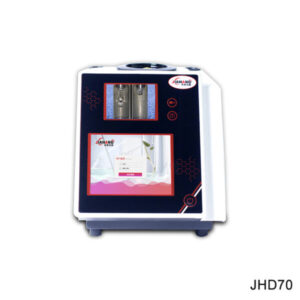 Description Dropping Point Softening Point Titrator JH-D70 Drop point meter perfectly combine high-precision temperature control technology and high-definition video camera technology, not only to provide users with accurate, stable and reliable test results, but also to bring users efficient and convenient test experience. High-definition video can easily and clearly see the whole process of sample state change, and automatically detect real-time graph display, which is convenient for users to accurately measure the sample drop point/softening point. The standard fat cup and measurement method can ensure the accuracy of the results. Drop point meter Introduction Innovation: *1: The high-definition video can see the sample changes; *2: Fully automatic realization of one-key automatic measurement; *3: Test two samples at a time; 4: Low temperature and gas protection functions can be customized; 5: Comply with national standards and international general standards. Drop point meter Feature And Application 1: HD video visual sample changes; 2: Fully automatic one-button automatic measurement; 3. Test two samples at a time; 4: Can print data directly through the printer; 5. Compliance with 21CFR Part 11, audit trail, Pharmacopoeia 2020 and electronic signature; 6: in line with national standards and international standards. Fields of use Drop point meter Automatic droplet point and softening point tester plays an important role in chemical industry and medical research. It is a necessary instrument for droplet point and softening point of asphalt, asphalt, polymers, resins, paste, wax and more materials.
Dropping Point Softening Point Titrator JH-D70 – Available On Request, Prices in Dollars
₦13,116.00 -
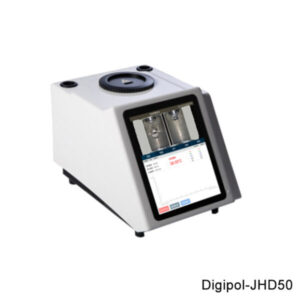 Description Dropping Point Softening Point Titrator – Digipol -JHD50 Digipol-JHD50 Asphalt softening point tester perfectly combines high-precision temperature control technology and high-definition video camera technology, not only to provide users with accurate, stable, and reliable test results, but also to provide users with efficient and convenient test experience. The high-definition video can easily and clearly see the whole process of the sample state change, and the real-time spectrum display is automatically detected, which is convenient for the user to accurately measure the dropping point/softening point of the sample. Standard cups and measurement methods can ensure the accuracy of the results. 1. Asphalt softening point tester Introduction Innovation: *1: The high-definition video can see the sample changes; *2: Test two samples at a time; 3: Data can be printed directly through the printer; 4: Comply with 21CFR Part 11, audit trail, “2020 Pharmacopoeia” and electronic signature; 5: Comply with national standards and international general standards. Asphalt softening point tester Feature And Application 1: HD video visual sample changes; 2: Fully automatic one-button automatic measurement; 3. Test two samples at a time; 4: Can print data directly through the printer; 5. Compliance with 21CFR Part 11, audit trail, Pharmacopoeia 2020 and electronic signature; 6: in line with national standards and international standards. Fields of use Asphalt softening point tester The Asphalt softening point tester has an important position in the chemical industry and medical research. It is an essential instrument for the dropping point and softening point of asphalt, asphalt, polymer, resin, paste, wax and more materials.
Dropping Point Softening Point Titrator – Digipol -JHD50 – Available On Request, Prices in Dollars
₦6,868.25 -
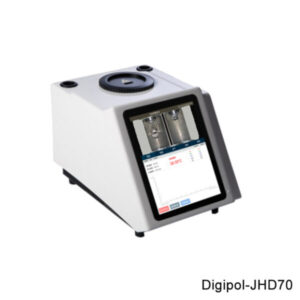 Description Dropping Point Softening Point Titrator – Digipol -JHD70 Digipol-JHD70 Paraffin drop point perfectly combines high-precision temperature control technology and high-definition video camera technology, not only to provide users with accurate, stable, and reliable test results, but also to provide users with efficient and convenient test experience. The high-definition video can easily and clearly see the whole process of the sample state change, and the real-time spectrum display is automatically detected, which is convenient for the user to accurately measure the dropping point/softening point of the sample. Standard cups and measurement methods can ensure the accuracy of the results. 1. Paraffin drop point Introduction Innovation: *1: The high-definition video can see the sample changes; *2: Fully automatic realization of one-key automatic measurement; *3: Test two samples at a time; 4: Data can be printed directly through the printer; 5: Comply with 21CFR Part 11, audit trail, “2020 Pharmacopoeia” and electronic signature; 6: Comply with national standards and international general standards. Paraffin drop point Feature And Application 1: HD video visual sample changes; 2: Fully automatic one-button automatic measurement; 3. Test two samples at a time; 4: Can print data directly through the printer; 5. Compliance with 21CFR Part 11, audit trail, Pharmacopoeia 2020 and electronic signature; 6: in line with national standards and international standards. Fields of use Paraffin drop point The Paraffin drop point has an important position in the chemical industry and medical research. It is an essential instrument for the dropping point and softening point of asphalt, asphalt, polymer, resin, paste, wax and more materials.
Dropping Point Softening Point Titrator – Digipol -JHD70 – Available On Request, Prices in Dollars
₦13,389.65 -
 Description Drosophila Bottles Drosophila Bottle 6oz (177ml) bottle, polypropylene, Autoclavable, Tray pack, 25 pieces/tray. 8trays/case
Drosophila Bottles – Available On Request, Prices in Dollars
₦137.18 -
 Description Drosophila Plugs Drosophila Plugs, fit for wide 6oz plastic bottles: 51-17720/17721, 50 Pieces/bag, 20Bags/case
Drosophila Plugs – Available On Request, Prices in Dollars
₦297.91 -
 Description Drosophila Vials Drosophila vials, narrow polystyrene vial, 25 x95mm, bulk pack, 25 pieces/bag, 20 Bags/case
Drosophila Vials – Available On Request, Prices in Dollars
₦122.89 -
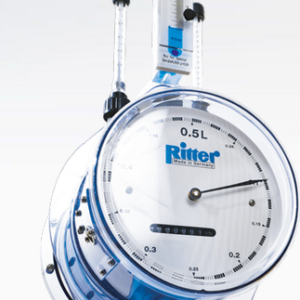 Description Drum-type Gas Meter, TG0.5-1.4571-PVC PRODUCT DESCRIPTION USER BENEFITS Highest accuracy: ±0,5% across full flow rate range Calibration traceable to the German National Primary Standard (PTB) Measurement of all gases and gas mixtures with equal accuracy Use with extremely corrosive and inert gases Lowest measurable flow rates Largest selection of measuring ranges Real time data acquisition option for PC (requires option »Pulse Generator«) Most durable construction – available, both chemically (from high-quality thermoplastics) and mechanically (stainless steel) Maintenance-free (just checking of packing liquid level required PERFORMANCE SPECIFICATIONS Top of Form Bottom of Form Type Flow Rate Minimum [ltr/h] Flow Rate Maximum [ltr/h] Flow Rate Standard [ltr/h] Readout Indication Minimum [ltr](1) Readout Indication Maximum [ltr](2) Measuring Drum Volume [ltr] Pressure loss [mbar] TG 0.5 1 60 50 0.002 9,999,999.9 0.5 0.4 TG 1 2 120 100 0.01 99,999,999 1.0 0.2 TG 3 6 360 300 0.02 99,999,999 3.0 0.2 TG 5 10 600 500 0.02 99,999,999 5.0 0.2 TG 10 20 1,200 1,000 0.1 99,999,999 10.0 0.1 TG 20 40 4,000 3,200 0.2 999,999,990 20.0 0.1 TG 25 50 7,000 5,000 0.1 999,999,990 25.0 0.1 TG 50 100 18,000 10,000 0.5 999,999,990 50.0 0.1 (1) The measurement error (±0.2%) is determined at standard flow and 20 °C (68 °F) (2) Minimum dial division The maximum gas inlet overpressure is dependent on the casing material: With plastic casings: 50 to 500 mbar / With SS casings: 0.5 to 40 bar At standard flow and 20 °C (68 °F) the measurement error (±0.2%) is determined. APPLICATIONS RITTER Drum-type (wet-test) Gas Meters are universally applicable for measuring the volume of flowing gases and are particularly effective when measurements demand the highest precision. The possibility of selecting the gas meter material from among 5 different excellent materials: Polyvinyl Chloride (PVC), Polypropylene (PP), Polyvinylide Fluoride (PVDF), PE-el (polyethylene electrically conductive) or refined stainless steel 1.4571 (316 Ti) enables the user individually to meet measurement requirements even in case of highly aggressive gases. For rugged, industrial applications, robust models with a stainless steel casing and plastic drum (four different materials) are available. The desired measurement range can be selected from among 8 sizes (types) extending as a whole from 1 Ltr/h to 18,000 Ltr/h at a gas temperature ranging from -10 °C to +80 °C. The solidly manufactured casing of the standard meters is designed to withstand a maximum overpressure of 50 mbar (plastic casings) or 500 mbar (stainless steel casings); meters for higher pressure ranges up to 40 bars are available. The measurement of RITTER Drum-type Gas Meters works on the principle of displacement. The gas meters contain a revolving measuring mechanism (measuring drum) within a packing liquid (usual: water or low-viscosity oil). The measuring drum compulsorily measures volume by periodically filling and emptying four rigid measuring chambers. Fastidious production methods and calibration enable a measuring accuracy of ± 0.2% at standard flow rate and approx. ± 0.5% over the whole measuring range. The major advantage and the superiority of volumetric gas meters (like drum-type gas meters) over other measurement principles, which determine gas volume using secondary measurable variables such as speed, heat capacity, hot-wire resistance or similar, is the direct measurement of volume. That means that the condition and the composition of the gas have no influence on the measurement accuracy. Correcting factors which take into account gas type, temperature, humidity etc are therefore not necessary. It should be noted that with other, non-volumetric measurements the accuracy given for that measurement can only be achieved if the correcting factors for the actual gas condition or gas mixture are exactly known. ADVANTAGES Advantages of Drum-type Meters in General The direct measurement of volume is the major advantage and the superiority of volumetric gas meters (like drum-type gas meters) over other measurement principles, which determine gas volume using secondary measurable variables such as speed, heat capacity, hot-wire resistance or similar. That means that the condition and the composition of the gas do not influence the measurement accuracy. Correcting factors which take into account gas type, temperature, humidity etc are therefore not necessary. It should be noted that with other, non-volumetric measurements the accuracy given for that measurement can only be achieved if the correcting factors for the actual gas condition or gas mixture are exactly known. The drum-type meters need no maintenance and no power supply (unless equipped with option Pulse Generator). Advantages of RITTER Drum-type Meters Casing and Measuring Drum out of superior plastics RITTER Drum-type Gas Meters are specifically designed for use with corrosive gases. They are made out of a selection of 4 superior plastics (PVC, PP, PVDF and electrically-conductive PE). A gas meter can therefore be selected which is completely resistant to the corrosive gases being measured. Stainless steel is not completely resistant to corrosive gases and will be damaged by them over time. Even RITTER’s Gas Meters with a stainless steel casing have a measuring drum made out of one of these high quality thermoplastics. This is because the measuring drum is the most important part of the gas meter and also the most susceptible to the effects of corrosive gases. Measuring Drum is welded – not soft soldered Competitor meters have a stainless steel casing and a measuring drum that is also made out of stainless steel. Because the steel plates used to make these measuring drums have to be so thin, they can only be soft soldered together. Soft solder welding are eaten away by aggressive gases very easily! So even when the stainless steel itself is fairly resistant to corrosive gases, the soft soldering is not. This can cause the measuring drum to completely fall apart when the soft soldering is eaten away. The measuring drum parts in RITTER Gas Meters are welded together with exactly the same material that the drum is made out of. PVC drums are welded together with PVC rods; PP drums with PP rods, PVDF drums with PVDF rods and PE drums with PE rods. The welds in RITTER Gas Meters are therefore as corrosion-resistant as the material used to build the drums. Casing and Measuring Drum resistant against Packing Liquid – if turned into an acid All drum-type gas meters contain a Packing Liquid – usually water. If the measuring drum is stainless steel and is used to measure a gas which reacts with water to form an acidic solution, the acidic solution can eat through the part of the measuring drum sitting under the water-line. This occurs most rapidly in gas meters which are not used very often. RITTER Gas Meters do not have this problem. No epoxy coating needed for measuring drums Some gas meter manufacturers offer stainless steel measuring drums with epoxy coating. It is very difficult to apply the coating completely evenly on the drum surface, especially in the sharp corners of the drum (where the soft solder welds are). These are weak spots where corrosive gases can even more easily start to attack and destroy the drum material and soft solder welds. Magnetic Coupling instead of O-ring for drum axis Competitor stainless steel gas meters have an axis which must go through the casing wall to connect the measuring drum to the needle indicator on the gas meter dial face. These meters have an O-ring or similar to seal the hole in the casing where the axis goes through. This O-Ring is under the packing liquid level. Because of the mechanical friction of the axis turning in the O-Ring, the O-Ring eventually begins to wear out. If a gas has reacted with the packing liquid and turned it acidic, this acidic solution also begins to eat into the O-Ring material. Sooner or later the O-ring starts leaking. This causes the level of the packing liquid to drop. This drop in packing liquid level causes the gas meter to measure inaccurately. At first, when leakage is small, the drop in packing liquid level may not be realized by the user, so he/she does not realize that the measurement is wrong. If this leak becomes greater, the acidic packing liquid which leaks into the counter mechanism casing can damage the parts there. RITTER uses a magnetic coupling system to connect the measuring drum to the needle indicator on the gas meter dial face. This means that there is no hole in the casing wall, and no O-Ring. The casing wall remains solid, and so there is no possibility of packing liquid leaking out. The gas meter remains gas and liquid-tight for its lifetime. Transparent casing with PVC Gas Meters If dirty gases are measured, the rotation of a drum-type gas meter measuring drum acts like a washing machine and forces the »dirt« out of the gas. This sediment builds up on the bottom of the gas meter casing. If it builds up too much it can hit the measuring drum, either slowing it down or making it stop altogether. If it slows it down, the measuring accuracy is affected without the user knowing. If it stops the rotation of the drum, it ruins that test run completely. With stainless steel gas meters, the user cannot check how much sediment has built up on the bottom of the gas meter casing and so does not know if the test runs are being affected. RITTER PVC Gas Meters have a transparent casing, which means that this sediment build-up can be very easily monitored. The gas meter can be taken off-line before the sediment build-up can affect measurement accuracy or ruin test runs. It can then be cleaned between runs. RITTER Meters can be repaired If a stainless steel gas meter has been epoxy-coated, it is very difficult, if not impossible, to repair. This is because epoxy-coated parts cannot be re-welded. Because of this, some stainless steel gas meter manufacturers refuse to repair these meters. When they do repair, these repairs can be very expensive. This is because undamaged epoxy-coated parts have to sometimes be removed to get to the damaged parts in the meter. Because the undamaged epoxy-coated parts cannot be re-welded, they have to be replaced along with the damaged parts. The thermoplastics which RITTER uses to build gas meters can be re-welded. That means that only the truly damaged parts need to be replaced. This makes RITTER repairs economical. MEASUREMENT PRINCIPLE Phase 1: Chamber 1: Beginning of filling (into space above packing liquid) Chamber2:Duringfilling Chamber3:Emptying Chamber 4:Not active Phase 2: Chamber 1: During filling Chamber2:Emptying Chamber3:Notactive Chamber 4:Beginning of filling (into space above packing liquid) Phase 3: Chamber 1: Filling completed / Chamber inlet & outlet closed Chamber2:Emptying Chamber3:Notactive Chamber 4:Filling Phase 4: Chamber 1: Emptying Chamber2:Emptying Chamber3:Filling Chamber 4:Just beginning to fill AVAILABLE MODEL (Materials) Legend PE-el = Polyethylene-electrically conductive PP = Polypropylene PVC = Polyvinyl chloride PVDF = Polyvinylide fluoride Stainless steel = 1.4571 Viton = Fluorine rubber For chemical resistance properties please contact us. EQUIPMENT 8-digit Totalizing Roller Counter Large, One-needle Dial Level and Levelling Feet Magnetic Coupling (between the measuring drum and counting mechanism), for an absolutely liquid-tight casing Multi-Chamber Measuring Drum Supports for Thermometer and Manometer Viton sealing ACCESSORIES Built-in Options Pulse Generator, standard or Ex-proof version (for connecting Electronic Display Unit/Computer LCD Display, resettable, 8-digit (replaces Totalizing Roller Counter) High precision Packing Limited Level1 Indicator for packing liquid level Accessories (external) Data Acquisition Software (RIGAMO), (for Windows) Gas Thermometer, measuring range 0 °C to +60 °C Thermometer packing gas, measuring range 0 °C to +60 °C Manometer for pressure, measuring range 0-10 / 0-20 / 0-50 mbar Manometer for pressure, measuring range 0-600 mbar / 0-1 bar Manometer for pressure, measuring range 0-6 / 0-10 bar; available for higher pressure ranges Electronics display unit displays volume and calculates flow rate via RS232 and analog-output in real time (pulse generator required) Packing liquids CalRiX, only for drum-type gas meters (TG) Pionier 4281, only for drum-type gas meters (TG) Solix for gas mixtures without CO2
Drum-type Gas Meter, TG0.5-1.4571-PE-el – Available On Request, Prices in Dollars
₦3,662.88 -
Description Drun -type Gas meter, TG0.5-1.4571-pp PRODUCT DESCRIPTION USER BENEFITS Highest accuracy: ±0,5% across full flow rate range Calibration traceable to the German National Primary Standard (PTB) Measurement of all gases and gas mixtures with equal accuracy Use with extremely corrosive and inert gases Lowest measurable flow rates Largest selection of measuring ranges Real time data acquisition option for PC (requires option »Pulse Generator«) Most durable construction – available, both chemically (from high-quality thermoplastics) and mechanically (stainless steel) Maintenance-free (just checking of packing liquid level required PERFORMANCE SPECIFICATIONS Top of Form Bottom of Form Type Flow Rate Minimum [ltr/h] Flow Rate Maximum [ltr/h] Flow Rate Standard [ltr/h] Readout Indication Minimum [ltr](1) Readout Indication Maximum [ltr](2) Measuring Drum Volume [ltr] Pressure loss [mbar] TG 0.5 1 60 50 0.002 9,999,999.9 0.5 0.4 TG 1 2 120 100 0.01 99,999,999 1.0 0.2 TG 3 6 360 300 0.02 99,999,999 3.0 0.2 TG 5 10 600 500 0.02 99,999,999 5.0 0.2 TG 10 20 1,200 1,000 0.1 99,999,999 10.0 0.1 TG 20 40 4,000 3,200 0.2 999,999,990 20.0 0.1 TG 25 50 7,000 5,000 0.1 999,999,990 25.0 0.1 TG 50 100 18,000 10,000 0.5 999,999,990 50.0 0.1 (1) The measurement error (±0.2%) is determined at standard flow and 20 °C (68 °F) (2) Minimum dial division The maximum gas inlet overpressure is dependent on the casing material: With plastic casings: 50 to 500 mbar / With SS casings: 0.5 to 40 bar At standard flow and 20 °C (68 °F) the measurement error (±0.2%) is determined. APPLICATIONS RITTER Drum-type (wet-test) Gas Meters are universally applicable for measuring the volume of flowing gases and are particularly effective when measurements demand the highest precision. The possibility of selecting the gas meter material from among 5 different excellent materials: Polyvinyl Chloride (PVC), Polypropylene (PP), Polyvinylide Fluoride (PVDF), PE-el (polyethylene electrically conductive) or refined stainless steel 1.4571 (316 Ti) enables the user individually to meet measurement requirements even in case of highly aggressive gases. For rugged, industrial applications, robust models with a stainless steel casing and plastic drum (four different materials) are available. The desired measurement range can be selected from among 8 sizes (types) extending as a whole from 1 Ltr/h to 18,000 Ltr/h at a gas temperature ranging from -10 °C to +80 °C. The solidly manufactured casing of the standard meters is designed to withstand a maximum overpressure of 50 mbar (plastic casings) or 500 mbar (stainless steel casings); meters for higher pressure ranges up to 40 bars are available. The measurement of RITTER Drum-type Gas Meters works on the principle of displacement. The gas meters contain a revolving measuring mechanism (measuring drum) within a packing liquid (usual: water or low-viscosity oil). The measuring drum compulsorily measures volume by periodically filling and emptying four rigid measuring chambers. Fastidious production methods and calibration enable a measuring accuracy of ± 0.2% at standard flow rate and approx. ± 0.5% over the whole measuring range. The major advantage and the superiority of volumetric gas meters (like drum-type gas meters) over other measurement principles, which determine gas volume using secondary measurable variables such as speed, heat capacity, hot-wire resistance or similar, is the direct measurement of volume. That means that the condition and the composition of the gas have no influence on the measurement accuracy. Correcting factors which take into account gas type, temperature, humidity etc are therefore not necessary. It should be noted that with other, non-volumetric measurements the accuracy given for that measurement can only be achieved if the correcting factors for the actual gas condition or gas mixture are exactly known. ADVANTAGES Advantages of Drum-type Meters in General The direct measurement of volume is the major advantage and the superiority of volumetric gas meters (like drum-type gas meters) over other measurement principles, which determine gas volume using secondary measurable variables such as speed, heat capacity, hot-wire resistance or similar. That means that the condition and the composition of the gas do not influence the measurement accuracy. Correcting factors which take into account gas type, temperature, humidity etc are therefore not necessary. It should be noted that with other, non-volumetric measurements the accuracy given for that measurement can only be achieved if the correcting factors for the actual gas condition or gas mixture are exactly known. The drum-type meters need no maintenance and no power supply (unless equipped with option Pulse Generator). Advantages of RITTER Drum-type Meters Casing and Measuring Drum out of superior plastics RITTER Drum-type Gas Meters are specifically designed for use with corrosive gases. They are made out of a selection of 4 superior plastics (PVC, PP, PVDF and electrically-conductive PE). A gas meter can therefore be selected which is completely resistant to the corrosive gases being measured. Stainless steel is not completely resistant to corrosive gases and will be damaged by them over time. Even RITTER’s Gas Meters with a stainless steel casing have a measuring drum made out of one of these high quality thermoplastics. This is because the measuring drum is the most important part of the gas meter and also the most susceptible to the effects of corrosive gases. Measuring Drum is welded – not soft soldered Competitor meters have a stainless steel casing and a measuring drum that is also made out of stainless steel. Because the steel plates used to make these measuring drums have to be so thin, they can only be soft soldered together. Soft solder welding are eaten away by aggressive gases very easily! So even when the stainless steel itself is fairly resistant to corrosive gases, the soft soldering is not. This can cause the measuring drum to completely fall apart when the soft soldering is eaten away. The measuring drum parts in RITTER Gas Meters are welded together with exactly the same material that the drum is made out of. PVC drums are welded together with PVC rods; PP drums with PP rods, PVDF drums with PVDF rods and PE drums with PE rods. The welds in RITTER Gas Meters are therefore as corrosion-resistant as the material used to build the drums. Casing and Measuring Drum resistant against Packing Liquid – if turned into an acid All drum-type gas meters contain a Packing Liquid – usually water. If the measuring drum is stainless steel and is used to measure a gas which reacts with water to form an acidic solution, the acidic solution can eat through the part of the measuring drum sitting under the water-line. This occurs most rapidly in gas meters which are not used very often. RITTER Gas Meters do not have this problem. No epoxy coating needed for measuring drums Some gas meter manufacturers offer stainless steel measuring drums with epoxy coating. It is very difficult to apply the coating completely evenly on the drum surface, especially in the sharp corners of the drum (where the soft solder welds are). These are weak spots where corrosive gases can even more easily start to attack and destroy the drum material and soft solder welds. Magnetic Coupling instead of O-ring for drum axis Competitor stainless steel gas meters have an axis which must go through the casing wall to connect the measuring drum to the needle indicator on the gas meter dial face. These meters have an O-ring or similar to seal the hole in the casing where the axis goes through. This O-Ring is under the packing liquid level. Because of the mechanical friction of the axis turning in the O-Ring, the O-Ring eventually begins to wear out. If a gas has reacted with the packing liquid and turned it acidic, this acidic solution also begins to eat into the O-Ring material. Sooner or later the O-ring starts leaking. This causes the level of the packing liquid to drop. This drop in packing liquid level causes the gas meter to measure inaccurately. At first, when leakage is small, the drop in packing liquid level may not be realized by the user, so he/she does not realize that the measurement is wrong. If this leak becomes greater, the acidic packing liquid which leaks into the counter mechanism casing can damage the parts there. RITTER uses a magnetic coupling system to connect the measuring drum to the needle indicator on the gas meter dial face. This means that there is no hole in the casing wall, and no O-Ring. The casing wall remains solid, and so there is no possibility of packing liquid leaking out. The gas meter remains gas and liquid-tight for its lifetime. Transparent casing with PVC Gas Meters If dirty gases are measured, the rotation of a drum-type gas meter measuring drum acts like a washing machine and forces the »dirt« out of the gas. This sediment builds up on the bottom of the gas meter casing. If it builds up too much it can hit the measuring drum, either slowing it down or making it stop altogether. If it slows it down, the measuring accuracy is affected without the user knowing. If it stops the rotation of the drum, it ruins that test run completely. With stainless steel gas meters, the user cannot check how much sediment has built up on the bottom of the gas meter casing and so does not know if the test runs are being affected. RITTER PVC Gas Meters have a transparent casing, which means that this sediment build-up can be very easily monitored. The gas meter can be taken off-line before the sediment build-up can affect measurement accuracy or ruin test runs. It can then be cleaned between runs. RITTER Meters can be repaired If a stainless steel gas meter has been epoxy-coated, it is very difficult, if not impossible, to repair. This is because epoxy-coated parts cannot be re-welded. Because of this, some stainless steel gas meter manufacturers refuse to repair these meters. When they do repair, these repairs can be very expensive. This is because undamaged epoxy-coated parts have to sometimes be removed to get to the damaged parts in the meter. Because the undamaged epoxy-coated parts cannot be re-welded, they have to be replaced along with the damaged parts. The thermoplastics which RITTER uses to build gas meters can be re-welded. That means that only the truly damaged parts need to be replaced. This makes RITTER repairs economical. MEASUREMENT PRINCIPLE Phase 1: Chamber 1: Beginning of filling (into space above packing liquid) Chamber2:Duringfilling Chamber3:Emptying Chamber 4:Not active Phase 2: Chamber 1: During filling Chamber2:Emptying Chamber3:Notactive Chamber 4:Beginning of filling (into space above packing liquid) Phase 3: Chamber 1: Filling completed / Chamber inlet & outlet closed Chamber2:Emptying Chamber3:Notactive Chamber 4:Filling Phase 4: Chamber 1: Emptying Chamber2:Emptying Chamber3:Filling Chamber 4:Just beginning to fill AVAILABLE MODEL (Materials) Legend PE-el = Polyethylene-electrically conductive PP = Polypropylene PVC = Polyvinyl chloride PVDF = Polyvinylide fluoride Stainless steel = 1.4571 Viton = Fluorine rubber For chemical resistance properties please contact us. EQUIPMENT 8-digit Totalizing Roller Counter Large, One-needle Dial Level and Levelling Feet Magnetic Coupling (between the measuring drum and counting mechanism), for an absolutely liquid-tight casing Multi-Chamber Measuring Drum Supports for Thermometer and Manometer Viton sealing ACCESSORIES Built-in Options Pulse Generator, standard or Ex-proof version (for connecting Electronic Display Unit/Computer LCD Display, resettable, 8-digit (replaces Totalizing Roller Counter) High precision Packing Limited Level1 Indicator for packing liquid level Accessories (external) Data Acquisition Software (RIGAMO), (for Windows) Gas Thermometer, measuring range 0 °C to +60 °C Thermometer packing gas, measuring range 0 °C to +60 °C Manometer for pressure, measuring range 0-10 / 0-20 / 0-50 mbar Manometer for pressure, measuring range 0-600 mbar / 0-1 bar Manometer for pressure, measuring range 0-6 / 0-10 bar; available for higher pressure ranges Electronics display unit displays volume and calculates flow rate via RS232 and analog-output in real time (pulse generator required) Packing liquids CalRiX, only for drum-type gas meters (TG) Pionier 4281, only for drum-type gas meters (TG) Solix for gas mixtures without CO2
Drum-type Gas Meter, TG0.5-1.4571-PP – Available On Request, Prices in Dollars
₦3,606.72


 No products in the cart.