


-
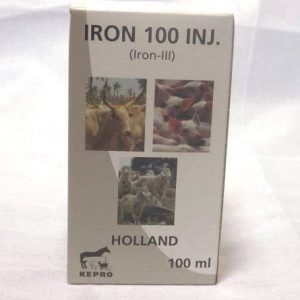 IRON 100 INJECTION Following intramuscular or subcutaneous injection of Iron 100 Inj., the hemoglobin concentration in the blood and packed cell volume increase rapidly, especially in iron deficiency anemia in animals. Most piglets are born with minimum iron reserves, and after a few days the red blood cell production begins to decrease and a deficiency in the overwhelming growth of the young animals is noticed. Therefore it is very important to supply this depletion of iron for normal growth and development of the young animals. It has been proven that a dose of 2 ml given within the first 3 days of birth shows no loss of weight or health. The iron supplements should be given an injection as a prophylactic aid to prevent iron deficiency anemia and the consequences (loss of appetite, diarrhea, retarded growth, and diminished resistance against infectious agents and in changing the of atmospheric conditions). Composition (per ml) Iron-III (as hydroxide dextran complex) 100 mg Contra-indications Vitamin-E deficiency and/or selenium deficiency in piglets are prevalent because of the increased chance of toxicity. Side effects Pain and inflammatory reactions may occur, along with discoloration of muscles. Sometimes anaphylactic reactions may occur. Administration of very high doses may cause siderosis, intoxication with hypotonia, shock and even death. Dosage and administration For deep intramuscular or subcutaneous injection at a suitable injection site. Treatment: Pigs : 3 ? 5 ml 1st injection, when necessary 2nd injection 7 days later. Piglets: 1 ? 2 ml on the 3rd day of life and on the 5th day of life. Cattle, horses: 5 ? 8 ml 1st injection, when necessary 2nd injection 7 days later. Calves, foals : 3 ? 8 ml in the 1st week of life, when necessary 2nd injection 7 days later. Sheep, goats : 3 ? 4 ml 1st injection, when necessary 2nd injection 7 days later. Dogs: 0.5 ? 2 ml 1st injection, when necessary 2nd injection 7 days later. Prophylaxis Piglets: 2 ml on 3rd day of life and on the 21st day of life. Sows: 5 ml two weeks before farrowing. Withdrawal period None. Storage Store in a dry, dark place between 15 ?C and 25 ?C. Keep medicines away from children. Packing 100 ml multidose vial packed in an individual box (48 vials per box).
Iron Dextran (Iron-III Injectable Supplement for Livestock) 100ml
₦0.00 -
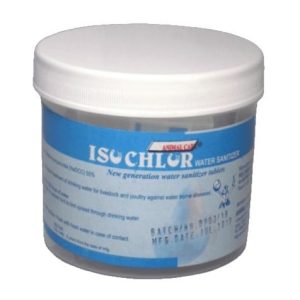 Isochlor Isochlor (Animal Care Brand) is a water treatment chemical that is very important for every animal raiser for the prevention of waterborne diseases in poultry and livestock. Presented in water-soluble form, this product is very effective for the provision of wholesome water to your animals. Waterborne diseases are a major threat to animal production and this product is a solution to that threat. ? Benefits of Isochlor (Animal Care Brand) Sustained release of available chlorine Highly stable during handling and storage. Broad-spectrum activity even in presence of organic matter Available chlorine yield can be measured easily Dissolves quickly in water with an effervescent effect Strongly recommended by WHO and FAO
Isochlor (Animal Care Brand | 20 Tablets | 100 Tablets)
₦8,450.00 -
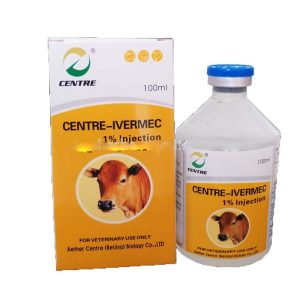 Ivermec Injectable 1% Ivermec Injectable 1% is suitable for the treatment and control of gastrointestinal nematodes and lungworms in sheep, goats, and cattle, as well as internal and external parasites in poultry. It is also for the treatment and control of gastrointestinal nematodes, and lungworms, and nasal bots. Some of the gastrointestinal worms (adult and immature) include Haemonchus contortus, Ostertagia circumcincta, Inchostrongylus spp., Coopenia spp., Nematodirus spp., Strongyloides papilosus, Oesophagostomum spp, and adult Chabertia ovina. Ivermec Injectable 1% is suitable for? Cow, Sheep, Goat, Poultry ? Composition Contains per ml: Ivermectin 10 mg ? Withdrawal period Meat: 14 days ? Ivermec Injectable 1%: Storage Store in a dry, dark place between 15 ?C and 25 ?C. Store in a closed packing. Wash hands carefully after using this product. Keep the medicine away from children. ? Indication for use Ivermec Injectable 1% is indicated for: Poultry: Internal parasites (nematodes, Capillaria spp. (crop worm), and Ascaridia spp.) and external parasites like mite and lice infestations. Sheep: Gastrointestinal worms (adult and immature): Cooperia spp, Haemonchus contortus, Ostertagia circumcinta, Trichostrongylus spp, Nematodirus spp, Oesophagostomum spp., Strongyloides papillosus, and adult Chabertia ovina. Lungworms (adult and immature): Dictyocaulus filaria. Nasal bot (all larval stages): Oestrus ovis. Goats: Gastrointestinal worms (adult and immature): Haemonchus contortus, Nematodirus spathiger, Oesophagostomum, Ostertagia circumcincta, Strongyloides papillosus, Trichostrongylus colubriformis, and adult Chabertia ovina. Lungworms (adult): Dictyocaulus filaria. Calves and cattle: Gastrointestinal worms (adult and immature): Ostertagia spp, Cooperia spp, Haemonchus placei, Trichostrongylus axei, Oesophagostomum spp, Nematodirus spp, Strongyloides spp, Bunostomum phlebotomum, Toxocara spp. Lungworms: Dictyocaulus viviparus. ? Ivermec Injectable 1%: Contraindications Do not administer to other animals than recommended. Severe adverse reactions, including fatalities in dogs, may occur. Do not use in pregnant animals, breeders in production, or layers producing eggs for human consumption. Do not administer to cows during the lactating period. ? Side effects None.
Ivermec Injectable 1% (10mL | 50mL | 100mL | 500mL)
₦5,850.00 -
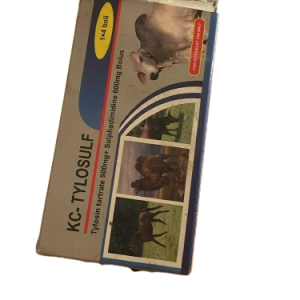 KC-TYLOSULF (Tylosula Tartrate 800mg ? Subtendimidine 600mg) Introduction KC-TYLOSULF is a potent veterinary medication formulated to combat a wide range of bacterial infections in livestock and poultry. Combining?Tylosula Tartrate 800mg?and?Subtendimidine 600mg, this broad-spectrum antibiotic ensures effective treatment against respiratory, gastrointestinal, and systemic infections. Trusted by veterinarians and farmers, KC-TYLOSULF promotes animal health, enhances productivity, and reduces mortality rates in herds and flocks. Key Features & Benefits Dual-Action Formula: Combines Tylosula Tartrate and Subtendimidine for enhanced efficacy. Broad-Spectrum Antibiotic: Effective against Gram-positive and Gram-negative bacteria. Rapid Absorption & Long-Lasting Effects: Ensures quick treatment and prolonged protection. Supports Respiratory & Digestive Health: Treats pneumonia, bronchitis, enteritis, and more. Reduces Mortality & Improves Growth: Enhances livestock and poultry productivity. Easy to Administer: Convenient dosage for oral or injectable use (as per veterinary guidance). Composition Each dose of KC-TYLOSULF contains: Tylosula Tartrate 800mg?? A macrolide antibiotic effective against Mycoplasma and other resistant bacteria. Subtendimidine 600mg?? A sulfonamide derivative that inhibits bacterial growth by interfering with folic acid synthesis. Indications & Uses KC-TYLOSULF is prescribed for the treatment and prevention of: Respiratory Infections: Pneumonia, bronchitis, pleuropneumonia (caused by?Pasteurella, Actinobacillus, Mycoplasma). Gastrointestinal Infections: Enteritis, diarrhea, colibacillosis (E. coli?infections). Systemic Bacterial Infections: Septicemia, metritis, mastitis. Secondary Infections: Post-viral or parasitic complications. Dosage & Administration For Cattle, Swine, Sheep, and Goats: Oral Administration: 1-2 doses per day for 3-5 days (as per vet recommendation). Injectable Use: Follow veterinary guidelines for intramuscular or subcutaneous injection. For Poultry: Administered via drinking water or feed (dosage adjusted per flock size). Note: Always consult a veterinarian before use to determine the correct dosage based on animal weight, condition, and severity of infection. Side Effects & Precautions Possible Side Effects: Mild gastrointestinal disturbances or allergic reactions in sensitive animals. Precautions: Avoid use in animals with known hypersensitivity to sulfonamides or macrolides. Do not administer to lactating animals without veterinary advice. Withdrawal periods must be observed before slaughter or milk production. Why Choose KC-TYLOSULF? Proven Efficacy: Clinically tested for maximum bacterial inhibition. Cost-Effective Treatment: Reduces the need for multiple medications. Supports Sustainable Farming: Minimizes infection spread in herds/flocks. Trusted by Professionals: Recommended by veterinarians worldwide. Why Choose KC-TYLOSULF? Proven Efficacy: Clinically tested for maximum bacterial inhibition. Cost-Effective Treatment: Reduces the need for multiple medications. Supports Sustainable Farming: Minimizes infection spread in herds/flocks. Trusted by Professionals: Recommended by veterinarians worldwide. Storage & Handling Store in a cool, dry place below 30?C (86?F). Protect from direct sunlight and moisture. Keep out of reach of children. Frequently Asked Questions (FAQs) 1. Is KC-TYLOSULF safe for pregnant animals? Consult a veterinarian before administering to pregnant or nursing animals. 2. What is the withdrawal period for meat/milk? Typically 7-10 days (confirm with local regulations). 3. Can KC-TYLOSULF be used for poultry? Yes, it is effective against bacterial infections in chickens, turkeys, and ducks. 4. How quickly does it work? Improvement is usually seen within 24-48 hours. 5. Can it be used alongside other medications? Consult a vet to avoid drug interactions. Conclusion KC-TYLOSULF (Tylosula Tartrate 800mg ? Subtendimidine 600mg) is a reliable, broad-spectrum veterinary antibiotic designed to safeguard livestock and poultry from life-threatening infections. Its dual-action formula ensures rapid recovery, supports herd health, and enhances farm productivity. Always follow professional veterinary advice for optimal results.
KC-TYLOSULF (Tylosula Tartrate 800mg ? Subtendimidine 600mg)
₦2,860.00 -
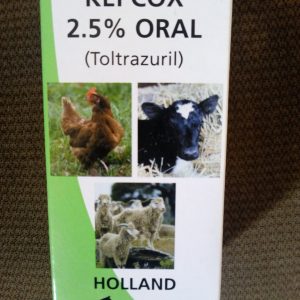 Dosage and Administration of Kepcox For oral administration via drinking water; Poultry 100ml to medicate 100 liters of drinking water for continuous medication during 48 hours. Alternatively, 300ml to medicate 100 liters?of drinking water for 8 hours a day for 2 days(8mg/kg). Calves, Sheep, Goat, Pigs 0.8ml per kg body weight for 2 days (20mg/kg). Precaution Do not administer to breeders in production or layers producing eggs for human consumption. In case of increased or lowered water intake, adjust the medication concentrations accordingly to obtain a daily dose of 7mg toltrazuril per kg bodyweight. If necessary, repeat after 5 days. Medicated drinking water should be used within 24 hours. Withdrawal period in meat. Poultry/turkeys?.19 days Calves?..63 days Small ruminants?..42 days Pigs?..77 days
KEPCOX 2.5% Oral Anticcocidial (Toltrazuril)
₦7,670.00 -
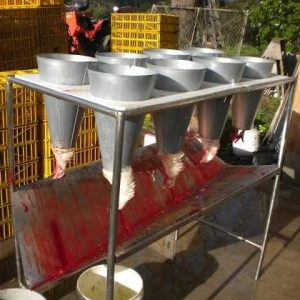 Killing Cones Killing cones are well-indicated for restraining birds in place while killing/slaughter. This is necessary to keep the birds in place if nerves kick in after the slaughtering process and the birds begin to jump or struggle. This way you don?t have a ?chicken running around with its head cut off?. This method can be used for the slaughter of a small number of birds as the slaughter must be humane. The whole process from catching to the point of death must be performed in a controlled manner so that the birds are protected from any avoidable pain, distress or suffering. Approaching the task in a confident, patient, calm and quiet manner will produce the best outcome for both the bird and the user. The slaughter process The slaughter process has been divided into several stages (preparation, catching and handling, restraint, stunning and slaughter). It?s very important to keep the chicken calm before the kill. A stressed-out chicken can mean a loss of glycogen levels which will negatively affect the taste, tenderness, color and keeping quality of the meat. How to use the restraining/killing cone The bird is placed in the cone with the head hanging below. Grip the neck and slaughter the bird. Check for signs that the bird is dead-feel the neck for a gap in the vertebrae; Ensure the bird is not breathing/ensure there is no blink reaction if the eye is touched and that the pupil is dilated. The bird can then be scalded, de-feathered and processed.
Killing Cones for Poultry Processing (Stainless Steel | 12/14 Birds Capacity)
₦0.00 -
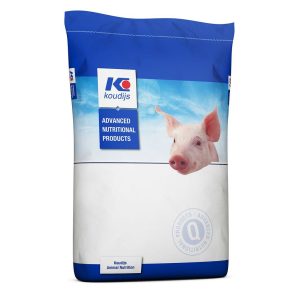 Koudijs Pig Concentrate 5% We offer Koudijs Pig Concentrate 5% which is well-balanced with phosphorous, calcium, potassium, sodium and chloride and high protein content to ensure faster weight gain, improve fertility and increase litter size on your pig farm. Koudijs Pig Concentrate (KPC) is mixed with basically broken maize and maize bran to make a complete feed irrespective of the stage of your pigs. The proportion of mixing remains the same but quantities and percentages differ. Mixing directions are as follows: <12 weeks (Starters) KPC= 22.5kg Broken maize= 40.5kg Maize bran= 37kg At 12weeks, a pig should weigh 46kg of live weight. During this period, it consumes 68.25kg of feeds. 13-17weeks (Growers) KPC= 19kg Broken maize= 40.5kg Maize bran= 40.5kg Alternative KPC= 17.5kg Broken maize= 55kg Maize bran= 10kg Rice polishing = 5kg Soya= 7.5kg Sunflower = 5kg At 17weeks, a pig should weigh 73kg live weight, it needs only 77.35kg for this stage. 18-24 weeks(Finishers) KPC= 15kg Broken maize= 37.5kg Maize bran= 47.5kg Alternative KPC= 15kg Broken maize= 52.5kg Maize bran= 15kg Rice polishing= 7.5kg Soya= 5kg Sunflower= 5kgs At 24weeks, a pig should weigh 105kg live weight, it only consumes 119.35kg at this stage. Pregnant sows KPC= 15kg Broken maize= 20kg Maize bran= 64.5kg Lime= 0.5kg Lactating sows KPC= 20kg Broken maize= 25kg Maize bran= 54.5kg Lime= 0.5kg
Koudijs Pig Concentrate (5% | 50kg Feed | Terratiga Brand)
₦170,040.00 -
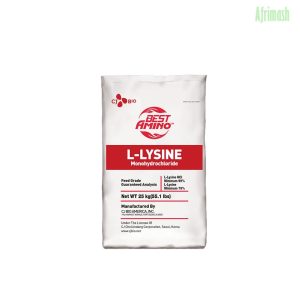 L-Lysine We supply L-lysine which is produced by an innovative fermentation process to become a leading lysine source for farmers all over the globe. It is the reference amino acid in modern animal nutrition. It must be provided in all types of animal feed to ensure optimal performance. The offered product is produced by the advanced fermentation process using raw materials such as corn and sugar cane, thus combining sustainability and efficiency in animal nutrition. It is an essential amino acid that has received much importance, especially for monogastric animals. It cannot be synthesized by the organism and needs to be provided with the feed. Therefore, supplementation of free L-lysine is the 1st limiting amino acid in swine feed and the 2nd limiting amino acid in broiler feed and aquatic animal feed. Note: The order of limiting amino acids can differ depending on the environment or feed ingredients. ? About CJ BIO?s L-Lysine L-Lysine is an essential amino acid for monogastric animals. This amino acid cannot be synthesized by the organism and needs to be provided with the feed. Therefore, supplementation of this amino acid ?s required to fully tap the animals? growth potential. Lysine is the most limiting amino acid affecting protein deposition (muscle building, weight gain, etc.). The essential amino acid requirement is expressed relatively to lysine. CJ BlO?s L-Lysine is produced by microbial fermentation with Corynebacterium glutamicum from natural raw materials. ? Functions It is the basic but most important amino acid that forms the basis for the ?Ideal protein model? in animal feed. Especially, L-lysine optimizes animal growth performance, synthesizes muscle proteins, and aids in calcium resorption. It optimizes growth performance. It ensures dietary crude protein reduction. Optimization for calcium resorption.
L-Lysine (CJ BIO Brand | L-Lys-HCl)
₦0.00 -
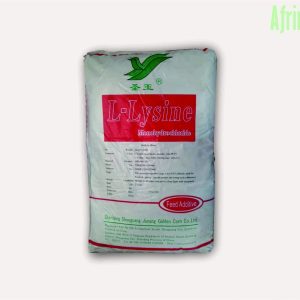 L-Lysine is an important part of a well-balanced animal nutrition program, including swine, poultry, and aquatic feed. Properties Lysine is the first-limiting amino acid in corn-soybean diets for swine and second limiting, after methionine, in poultry. L-Lysine monohydrochloride: Appears as a yellowish-white, crystalline powder This feed grade additive has a minimum purity of 98.5% L-Lysine HCl and 78.8% L-Lysine. Supplementation of livestock diet with amino-acids Essential amino-acids lay the groundwork for meeting livestock needs. However, as feedstuff alone, often fall short of supplying the needed quantities, supplementing the amino-acids into diets prove a cost-effective option. Advantages of supplementing feed with essential amino acids in customized diets include improved weight gain and maximized feed utilization etc. Despite the option of supplementation, it is critical to ensure a balance of nutrients as the absence of one essential amino acid reduces the capacity of an animal to synthesize additional proteins. thus, this leads to the inefficient use of feed nutrients, retarded/slow growth and the consequent economic loss. Constituents of L-Lysine Corn, which comprises the largest portion of monogastric diets, is low in lysine, thus, to meet the?amino acid requirements of swine and poultry, high-protein ingredients such as soybean meal and?animal by-product meals are blended with corn. However, L-Lysine as a feed additive help improves the?flexibility with utilizing non-traditional feed ingredients, as well as improve profitability without the consequent?loss of feed quality. Since?excess protein was used in the past to meet up with the requirement of the first limiting amino-acid, this cost-effective approach in meeting the lysine requirement of livestock-by reducing the amount of costly-high-protein diet previously fed to livestock is well recommended. Effect on species Swine: Leaner, faster-growing pigs have been observed to respond to higher dietary levels of lysine when compared with pigs on average type diets.?Thus, this translates into leaner pigs with improved feed efficiency, improved carcass yield and better margins over feed costs. Poultry: Supplementation of the diet with lysine improves the breast meat yield. Dosage and administration of feed grade L-Lysine Animal species: All livestock Route of administration: Inclusion in feed Dosage: 0.1% to 0.5% inclusion rate Precaution Store in a cool dry place, thus protect from light. Shelf life:?2 years from production date
L-Lysine Monohydrochloride ? Feed Grade (25kg)
₦0.00 -
L-Lysine is an important part of a well-balanced animal nutrition program, including swine, poultry, and aquatic feed. Properties Lysine is the first-limiting amino acid in corn-soybean diets for swine and second limiting, after methionine, in poultry. L-Lysine monohydrochloride: Appears as a yellowish-white, crystalline powder This feed grade additive has a minimum purity of 98.5% L-Lysine HCl and 78.8% L-Lysine. Supplementation of livestock diet with amino-acids Essential amino-acids lay the groundwork for meeting livestock needs. However, as feedstuff alone, often fall short of supplying the needed quantities, supplementing the amino-acids into diets prove a cost-effective option. Advantages of supplementing feed with essential amino acids in customized diets include improved weight gain and maximized feed utilization etc. Despite the option of supplementation, it is critical to ensure a balance of nutrients as the absence of one essential amino acid reduces the capacity of an animal to synthesize additional proteins. thus, this leads to the inefficient use of feed nutrients, retarded/slow growth and the consequent economic loss. Constituents of L-Lysine Corn, which comprises the largest portion of monogastric diets, is low in lysine, thus, to meet the?amino acid requirements of swine and poultry, high-protein ingredients such as soybean meal and?animal by-product meals are blended with corn. However, L-Lysine as a feed additive help improves the?flexibility with utilizing non-traditional feed ingredients, as well as improve profitability without the consequent?loss of feed quality. Since?excess protein was used in the past to meet up with the requirement of the first limiting amino-acid, this cost-effective approach in meeting the lysine requirement of livestock-by reducing the amount of costly-high-protein diet previously fed to livestock is well recommended. Effect on species Swine: Leaner, faster-growing pigs have been observed to respond to higher dietary levels of lysine when compared with pigs on average type diets.?Thus, this translates into leaner pigs with improved feed efficiency, improved carcass yield and better margins over feed costs. Poultry: Supplementation of the diet with lysine improves the breast meat yield. Dosage and administration of feed grade L-Lysine Animal species: All livestock Route of administration: Inclusion in feed Dosage: 0.1% to 0.5% inclusion rate Precaution Store in a cool dry place, thus protect from light. Shelf life:?2 years from production date
L-Lysine Monohydrochloride ? Feed Grade (25kg)
₦0.00 -
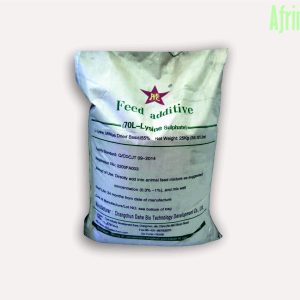 Properties of?L-Lysine Sulphate The significant advantage of lysine sulphate over lysine hydrochloride is the lack of chlorine (chlorine content in lysine-hydrochloride is about 19.4%). An excess of chloride ions is commonly found in feeds containing bran particles (laying hens, pigs) and this reduces the concentration of bicarbonate anions and increases the acidity. is an important part of a well-balanced animal nutrition program, including swine, poultry, and aquatic feed. Lysine is the first-limiting amino acid in corn-soybean diets for swine and second limiting, after methionine, in poultry. This product contains L-Lysine sulphate at 70% L-Lysine content is at 55% (minimum dried basis) Production: Microbial synthesis. Supplementation of livestock diet with amino-acids Essential amino-acids lay the groundwork for meeting livestock needs. However, as feedstuff alone, often fall short of supplying the needed quantities, supplementing the amino-acids into diets prove a cost-effective option. Advantages of supplementing feed with essential amino acids in customized diets include improved weight gain and maximized feed utilization etc. Despite the option of supplementation, it is critical to ensure a balance of nutrients as the absence of one essential amino acid reduces the capacity of an animal to synthesize additional proteins. thus, this leads to the inefficient use of feed nutrients, retarded/slow growth and the consequent economic loss. Constituents of L-Lysine Corn, which comprises the largest portion of monogastric diets, is low in lysine, thus, to meet the?amino acid requirements of swine and poultry, high-protein ingredients such as soybean meal and?animal by-product meals are blended with corn. However, L-Lysine as a feed additive help improves the?flexibility with utilizing non-traditional feed ingredients, as well as improve profitability without the consequent?loss of feed quality. Since?excess protein was used in the past to meet up with the requirement of the first limiting amino-acid, this cost-effective approach in meeting the lysine requirement of livestock-by reducing the amount of costly-high-protein diet previously fed to livestock is well recommended. Effects of L-Lysine on livestock species Swine: Leaner, faster-growing pigs have been observed to respond to higher dietary levels of lysine when compared with pigs on average type diets.?Thus, this translates into leaner pigs with improved feed efficiency, improved carcass yield and better margins over feed costs. Poultry: Supplementation of the diet with lysine improves the breast meat yield. Dosage and administration of feed grade L-Lysine sulphate Animal species: All livestock Route of administration: Inclusion in feed/mix properly Dosage: 0.3% to 1% inclusion rate Precaution Store in a cool dry place, thus protect from light. Shelf life:?2 years from production date
L-Lysine Sulphate ? Feed Additive (25kg)
₦150,410.00 -
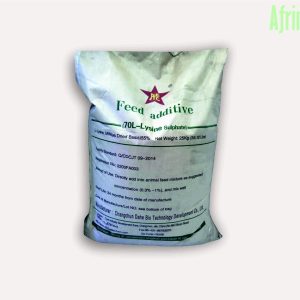 Properties of?L-Lysine Sulphate The significant advantage of lysine sulphate over lysine hydrochloride is the lack of chlorine (chlorine content in lysine-hydrochloride is about 19.4%). An excess of chloride ions is commonly found in feeds containing bran particles (laying hens, pigs) and this reduces the concentration of bicarbonate anions and increases the acidity. is an important part of a well-balanced animal nutrition program, including swine, poultry, and aquatic feed. Lysine is the first-limiting amino acid in corn-soybean diets for swine and second limiting, after methionine, in poultry. This product contains L-Lysine sulphate at 70% L-Lysine content is at 55% (minimum dried basis) Production: Microbial synthesis. Supplementation of livestock diet with amino-acids Essential amino-acids lay the groundwork for meeting livestock needs. However, as feedstuff alone, often fall short of supplying the needed quantities, supplementing the amino-acids into diets prove a cost-effective option. Advantages of supplementing feed with essential amino acids in customized diets include improved weight gain and maximized feed utilization etc. Despite the option of supplementation, it is critical to ensure a balance of nutrients as the absence of one essential amino acid reduces the capacity of an animal to synthesize additional proteins. thus, this leads to the inefficient use of feed nutrients, retarded/slow growth and the consequent economic loss. Constituents of L-Lysine Corn, which comprises the largest portion of monogastric diets, is low in lysine, thus, to meet the?amino acid requirements of swine and poultry, high-protein ingredients such as soybean meal and?animal by-product meals are blended with corn. However, L-Lysine as a feed additive help improves the?flexibility with utilizing non-traditional feed ingredients, as well as improve profitability without the consequent?loss of feed quality. Since?excess protein was used in the past to meet up with the requirement of the first limiting amino-acid, this cost-effective approach in meeting the lysine requirement of livestock-by reducing the amount of costly-high-protein diet previously fed to livestock is well recommended. Effects of L-Lysine on livestock species Swine: Leaner, faster-growing pigs have been observed to respond to higher dietary levels of lysine when compared with pigs on average type diets.?Thus, this translates into leaner pigs with improved feed efficiency, improved carcass yield and better margins over feed costs. Poultry: Supplementation of the diet with lysine improves the breast meat yield. Dosage and administration of feed grade L-Lysine sulphate Animal species: All livestock Route of administration: Inclusion in feed/mix properly Dosage: 0.3% to 1% inclusion rate Precaution Store in a cool dry place, thus protect from light. Shelf life:?2 years from production date
L-Lysine Sulphate ? Feed Additive (25kg)
₦150,410.00 -
Properties of?L-Lysine Sulphate The significant advantage of lysine sulphate over lysine hydrochloride is the lack of chlorine (chlorine content in lysine-hydrochloride is about 19.4%). An excess of chloride ions is commonly found in feeds containing bran particles (laying hens, pigs) and this reduces the concentration of bicarbonate anions and increases the acidity. is an important part of a well-balanced animal nutrition program, including swine, poultry, and aquatic feed. Lysine is the first-limiting amino acid in corn-soybean diets for swine and second limiting, after methionine, in poultry. This product contains L-Lysine sulphate at 70% L-Lysine content is at 55% (minimum dried basis) Production: Microbial synthesis. Supplementation of livestock diet with amino-acids Essential amino-acids lay the groundwork for meeting livestock needs. However, as feedstuff alone, often fall short of supplying the needed quantities, supplementing the amino-acids into diets prove a cost-effective option. Advantages of supplementing feed with essential amino acids in customized diets include improved weight gain and maximized feed utilization etc. Despite the option of supplementation, it is critical to ensure a balance of nutrients as the absence of one essential amino acid reduces the capacity of an animal to synthesize additional proteins. thus, this leads to the inefficient use of feed nutrients, retarded/slow growth and the consequent economic loss. Constituents of L-Lysine Corn, which comprises the largest portion of monogastric diets, is low in lysine, thus, to meet the?amino acid requirements of swine and poultry, high-protein ingredients such as soybean meal and?animal by-product meals are blended with corn. However, L-Lysine as a feed additive help improves the?flexibility with utilizing non-traditional feed ingredients, as well as improve profitability without the consequent?loss of feed quality. Since?excess protein was used in the past to meet up with the requirement of the first limiting amino-acid, this cost-effective approach in meeting the lysine requirement of livestock-by reducing the amount of costly-high-protein diet previously fed to livestock is well recommended. Effects of L-Lysine on livestock species Swine: Leaner, faster-growing pigs have been observed to respond to higher dietary levels of lysine when compared with pigs on average type diets.?Thus, this translates into leaner pigs with improved feed efficiency, improved carcass yield and better margins over feed costs. Poultry: Supplementation of the diet with lysine improves the breast meat yield. Dosage and administration of feed grade L-Lysine sulphate Animal species: All livestock Route of administration: Inclusion in feed/mix properly Dosage: 0.3% to 1% inclusion rate Precaution Store in a cool dry place, thus protect from light. Shelf life:?2 years from production date
L-Lysine Sulphate ? Feed Additive (25kg)
₦150,410.00 -
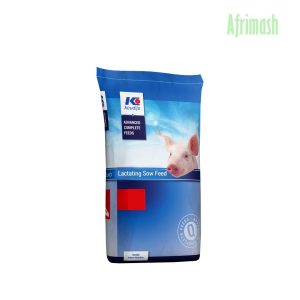 Lactating Sow Feed We offer Lactating Sow Feed a premium nutritional package for breastfeeding sows that prevent excessive weight loss. Using our feeds, we are confident that your sows will optimally produce milk to the maximal joy of the young piglets. Our feeds are easy to use and you will require no mixing equipment for application. ? Sow Lactation Lactation is the most demanding phase of the production cycle. The lactation diet, as offered in our Lactating Sow Feed, should have greater amino acid and greater energy content than a gestation diet because significant protein and energy is needed for milk production. Sows require significantly more nutrients in lactation than in gestation to care for their litters without sacrificing body condition. The sow needs all the nutrients she can get during lactation. The more the sow eats the better potential she has for greater milk production, the heavier litters attain at weaning and the shorter time required for the sows to return to estrus.? The demand for energy and protein increases immediately following farrowing. Feeding sows are better-fed ad libitum (feeding to satisfaction) immediately to allow them to consume enough feed to prevent body condition loss. Allowing the sows to eat what they need during lactation helps them to fulfill their needs on their own. This helps to minimize body weight loss during lactation, which, in turn, helps maximize piglet growth rates and optimize reproductive performance. ? Feeding your Pigs with Lactating Sow Feed The most important part of swine production is knowing the correct way to feed pigs. To meet the necessary nutritional requirement of your pigs, they need a high energy diet that is low in fiber but contains ample protein. Pigs will consume enormous amounts of food quickly. To raise and maintain a healthy stock, maximize growth and reproduction, and increase production, it is necessary to feed them the right food and a balanced diet from wean to finish. Foods to Avoid When creating your own pig food mixture, there are certain types of food you?ll want to avoid for reasons ranging from slowed growth rate to outright toxicity. Here are the general foods to avoid in pig feed: Sweets and high-sugar foods Dog food Cracked corn Milk Fish Meat Fruits Potatoes Foods high in sugars can slow growth rates while milk, meats, and fish can harbor viruses. Pits and seeds of apples, pears, apricots, and peaches contain a naturally occurring substance called amygdalin which is a cyanogenic glycoside that is released when chewed. Amygdalin will cause illness, discomfort, or even death. Potatoes contain natural toxins called glycoalkaloids, which can cause severe stomach ache or even death (though rare). Glycoalkaloids also contain solanine which destroys red blood cells, causes diarrhea, and heart failure. Environmental Control For Optimized Growth To maximize feed intake, a number of other factors need to be considered. These include temperature & environmental control, adequate supply of water, and sanitation control programs. Temperature: Pig temperature requirements are important to growth and production. Pigs are highly adaptable animals and can perform well within a range of temperatures. However, temperatures too low or too high can have adverse effects on the stock. If, for example, temperatures are too cold, a pig will feed more but expend more energy to stay warm, resulting in slow growth. Hot weather can lead to heat stress and reduce feed consumption (and can possibly lead to death), so it is important to?keep livestock cool in summer. Consequently, growth and maturity rates slow down, conception rates fall, and pig flow is reduced, disrupting stock levels. Depending on the season, keep buildings well-ventilated or heated, and provide adequate air space within the pen to ensure pig growth and production rates are maintained. Water: Provide lots of fresh, clean water. Water is the central part of a pig?s diet. One-half to two-thirds of its body weight is water. Access to clean drinking water is essential to a pig?s growth rate. Newly weaned pigs are especially prone to dehydration. Pigs must have water readily accessible for drinking throughout the day to maintain proper hydration. Sanitation: You should endeavor to implement sanitation protocols on your farm. Poor sanitation can lead to undetected disease challenges that reduce food intake. Properly designed feeders will encourage maximum feed intake.
Lactating Sow Feed (25kg | 50kg | Terratiga Brand)
₦33,735.00 -
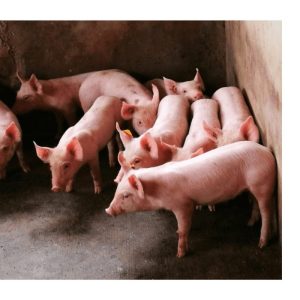 Weaners Large White Pigs | Female | Male Our post weaners large white pigs breed have been vaccinated and dewormed. Recommended feed constituents for pigs include (PKC 53%, corn bran 28.3%, soybean meal 16%, bone meal 2%, salt 0.5%, premix 0.2%). The large white pig is an exotic breed of pig known as the leading bacon-producing breed. We have female and male weaners large white pigs Important points to note about the large white pig (Large Yorkshire) A large white pig has a moderately long head, has a slightly dished face, and a broad snout. Its neck is fine, long, and evenly full to shoulders with deep and wide chests. Additionally, they have long, level, and wide back. Mature boars have weights between 200 kg and 450kg and mature sow weighs between 200 kg and 350 kg. Large White pigs possess good carcass quality. The breed is highly prolific and an efficient feed utilizer. We offer the hybrid large white pigs with the following characteristics: Bacon type breed Other distinguishing characteristics are erect ear, the snout of medium length, large in size, and slightly dished face Skin is pink colored and is free from wrinkles with a long and moderately fine coat. The neck is long and full to the shoulder. The back is slightly arched. We have the weaners and postweaners for sale. Excellent for crossbreeding.
Large White Pigs
₦91,000.00 -
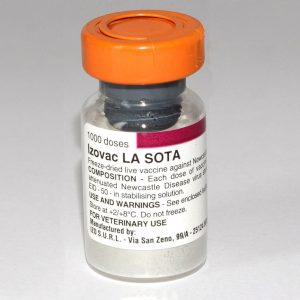 LaSota Vaccine LaSota vaccine is a prophylactic regimen prepared using the live attenuated LaSota strain of the Newcastle disease virus, cultured on embryonated SPF eggs, freeze-dried and vacuum-sealed. The vaccine contains streptomycin and penicillin as bacteriostatic agents. It also contains fungizone as a fungistatic agent. They are presented in medium-dose vials available in 250 and 500 doses. 250 and 500 dose vaccines are required to vaccinate 250 and 500 birds respectively. The vaccine has undergone strict potency, safety, and purity tests and meets USDA requirements. Thus, it is safe to use on animals. ? LaSota vaccine: Indications Administration on healthy chickens for the prevention of Newcastle disease. It is recommended for the vaccination of healthy chickens 14 days of age or older by drinking water administration or by aerosol spray. Note that spray vaccination is recommended for revaccination only. Revaccination is recommended at four weeks and 16 weeks of age. ? Target species Poultry (Chickens, turkeys, pheasants, pigeons). ? LaSota Vaccine: Dosage and Administration Guide Directions for Drinking Water Vaccination: Do not open and mix the vaccine until ready to vaccinate. Remove all medication, sanitisers and disinfectants from the drinking water 72 hours prior to vaccination. Provide sufficient waterers so that all of the birds can drink at one time. Clean and rinse the waterers thoroughly. Withhold all water from the birds for two (2) to four (4) hours prior to vaccination to stimulate thirst. Add nonfat dry milk to the water at the rate of one (1) ounce per gallon before mixing the vaccine. Remove the aluminium seal and rubber stopper from a vaccine vial. Fill the vaccine vial two-thirds (2/3) full with clean, cool water and mix gently. Mix the dissolved vaccine with water as shown below: Age of birds Water per 1,000 doses vaccine 2-4 weeks 2.5 gallons (9.9 L) 4-8 weeks 5 gallons (18.9 L) 8 weeks or older 10 gallons (37.9 L) Distribute the vaccine solution among the waterers. Avoid direct sunlight. Do not provide any other drinking water until all of the vaccine mixtures has been consumed. Spray Aerosol Vaccination: Use only for revaccination of healthy chickens two (2) weeks of age or older. Do not use for initial vaccination. Use a sprayer delivering an aerosol-like mist to disperse the rehydrated vaccine quickly and evenly throughout a house of chickens. ? Precautions to take Endeavour not to vaccinate diseased birds. Birds should be free of respiratory diseases and parasitic infestations. Vaccinate all of the birds on the same premises at the same time. Avoid stress conditions during and following vaccination. Use the entire contents when first opened. Burn the container and all unused contents.
LaSota Vaccine (Medium Dose Vials | 100 | 200 | 500 | 1000 | 2000) + Transport Flask
₦1,950.00

 No products in the cart.