

-
 Arbi D SpecificationRequires Prescription (YES/NO)YesGenerics?Irbesartan , Hydrochlorothiazide Used ForHypertensionHow it worksIrbesartan : Irbesartan is a potent, orally active, selective angiotensin-II receptor (type AT1) antagonist. It is expected to block all actions of angiotensin-II mediated by the AT1 receptor, regardless of the source or route of synthesis of angiotensin-II. The selective antagonism of the angiotensin-II (AT1) receptors results in increases in plasma renin levels and angiotensin-II levels, and a decrease in plasma aldosterone concentration. Serum potassium levels are not significantly affected by irbesartan alone at the recommended doses. Irbesartan does not inhibit ACE (kininase-II), an enzyme which generates angiotensin-II and also degrades bradykinin into inactive metabolites. Irbesartan does not require metabolic activation for its activity. Hydrochlorothiazide : Hydrochlorothiazide is a thiazide diuretic. The mechanism of antihypertensive effect of thiazide diuretic is not fully known. Thiazides affect the renal tubular mechanisms of electrolyte reabsorption, directly increasing excretion of sodium and chloride in approximately equivalent amounts. The diuretic action of hydrochlorothiazide reduces plasma volume, increases plasma renin activity, increases aldosterone secretion, with consequent increases in urinary potassium and bicarbonate loss, and decreases in serum potassium. Presumably through blockade of the renin-angiotensin-aldosterone system, co-administration of irbesartan tends to reverse the potassium loss associated with these diuretics. With hydrochlorothiazide, onset of diuresis occurs in 2 hours, and peak effect occurs at about 4 hours, while the action persists for approximately 6-12 hours.Arbi D Usage And SafetyDosage?Irbesartan , Hydrochlorothiazide Side EffectsCardiac disorders: Common: increases in blood urea nitrogen (BUN), creatinine and creatine kinase Uncommon: decreases in serum potassium and sodium .Uncommon: syncope, hypotension, tachycardia, oedema.Nervous system disorders: Common: dizziness Uncommon: orthostatic dizziness Not known: headache . Ear and labyrinth disorders: Not known: tinnitus. Respiratory, thoracic and mediastinal disorders: Not known: cough. Gastrointestinal disorders: Common: nausea/vomiting , Uncommon: diarrhoea , Not known: dyspepsia, dysgeusia .Drug InteractionsIrbesartan : Lithium , kaliuretic diuretics, laxatives, amphotericin, carbenoxolone, penicillin G sodium , heparin sodium , digitalis glycosides, antiarrhythmics , selective COX-2 inhibitors, acetylsalicylic acid , Hydrochlorothiazide: Thiazide diuretics , Alcohol , Antidiabetic medicinal products (oral agents and insulins) , Colestyramine and Colestipol resins , Corticosteroids, ACTH , Digitalis glycoside , Pressor amines (e.g. noradrenaline) , tubocurarine , probenecid or sulfinpyrazone , calcium supplements or calcium sparing medicinal products (e.g. vitamin D therapy) , Carbamazepine , atropine, beperiden , cyclophosphamide, methotrexate.Indication? Treatment of essential hypertension. ? This fixed dose combination is indicated in adult patients whose blood pressure is not adequately controlled on irbesartan or hydrochlorothiazide alone. ? It may also be used as initial therapy in patients who are likely to need multiple drugs to achieve their blood pressure goals .When not to Use? Hypersensitivity to the active substances or to any of the excipients or to other sulfonamide-derived substances (hydrochlorothiazide is a sulfonamide-derived substance)? Second and third trimesters of pregnancy.? Severe renal impairment (creatinine clearance <30 ml/min).? Refractory hypokalaemia, hypercalcaemia.? Severe hepatic impairment, biliary cirrhosis and cholestasis.? The concomitant use of Irbesartan/Hydrochlorothiazide with aliskiren-containing products is contraindicated in patients with diabetes mellitus or renal impairment (creatinine clearance <60ml/min/1.73 m?).? Due to its HCT component Irbesartan/HCT tablets are contraindicated in anuric patientsArbi D PrecautionsPrecautionIt has been rarely associated with symptomatic hypotension in hypertensive patients without other risk factors for hypotension. Symptomatic hypotension may be expected to occur in patients who are volume and/or sodium depleted by vigorous diuretic therapy, dietary salt restriction, diarrhea or vomiting. Such conditions should be corrected before initiating therapy with Irbesartan/Hydrochlorothiazide.Arbi D WarningsWarning 1There is an increased risk of severe hypotension and renal insufficiency when patients with bilateral renal artery stenosis or stenosis of the artery to a single functioning kidney are treated with angiotensin converting enzyme inhibitors or angiotensin-II receptor antagonists. While this is not documented with Irbesartan/Hydrochlorothiazide , a similar effect should be anticipated.Warning 2Patients with primary aldosteronism generally will not respond to antihypertensive medicinal products acting through inhibition of the renin-angiotensin system. Therefore, the use of Irbesartan/Hydrochlorothiazide is not recommended.Warning 3Thiazides should be used with caution in patients with impaired hepatic function or progressive liver disease, since minor alterations of fluid and electrolyte balance may precipitate hepatic coma. Irbesartan/HCT must not be used in patients with severe hepatic impairment. No dosage adjustment is required in patients with mild to moderate hepatic impairment.Arbi D Additional InformationPregnancy categoryAlways consult your physician before using any medicine.Storage (YES/NO)Store this medicine at room temperature, away from direct light and heat.
Arbi D Tablets 300Mg/12.5Mg (1 Box = 4 Strips) (1 Strip = 7 Tablets)
₦5,524.00 -
Arbi Tablets SpecificationRequires Prescription (YES/NO)YesGenericsIrbesartanUsed ForHypertensionHow it worksIrbesartan : Irbesartan is a potent, orally active, selective angiotensin-II receptor (type AT1) antagonist. It is expected to block all actions of angiotensin-II mediated by the AT1 receptor, regardless of the source or route of synthesis of angiotensin-II. The selective antagonism of the angiotensin-II (AT1) receptors results in increases in plasma renin levels and angiotensin-II levels, and a decrease in plasma aldosterone concentration. Serum potassium levels are not significantly affected by irbesartan alone at the recommended doses. Irbesartan does not inhibit ACE (kininase-II), an enzyme which generates angiotensin-II and also degrades bradykinin into inactive metabolites. Irbesartan does not require metabolic activation for its activity.Arbi Tablets Usage And SafetyDosageIrbesartanSide EffectsCardiac disorders: Common: increases in blood urea nitrogen (BUN), creatinine and creatine kinase Uncommon: decreases in serum potassium and sodium .Uncommon: syncope, hypotension, tachycardia, oedema.Nervous system disorders: Common: dizziness Uncommon: orthostatic dizziness Not known: headache . Ear and labyrinth disorders: Not known: tinnitus. Respiratory, thoracic and mediastinal disorders: Not known: cough. Gastrointestinal disorders: Common: nausea/vomiting , Uncommon: diarrhoea , Not known: dyspepsia, dysgeusia .Drug InteractionsIrbesartan : Lithium , kaliuretic diuretics, laxatives, amphotericin, carbenoxolone, penicillin G sodium , heparin sodium , digitalis glycosides, antiarrhythmics , selective COX-2 inhibitors, acetylsalicylic acid.IndicationTreatment of essential hypertension.When not to UseDo not take if: - You are in the second or third trimester of pregnancy, - You are breast-feeding or - If you are allergic to any of the ingredients.Arbi Tablets PrecautionsPrecautionThere is an increased risk of severe hypotension and renal insufficiency when patients with bilateral renal artery stenosis or stenosis of the artery to a single functioning kidney are treated with angiotensin converting enzyme inhibitors or angiotensin-II receptor antagonists. While this is not documented with Irbesartan/Hydrochlorothiazide , a similar effect should be anticipated.Arbi Tablets WarningsWarning 1There is evidence that the concomitant use of ACE-inhibitors, angiotensin II receptor blockers or aliskiren increases the risk of hypotension, hyperkalaemia and decreased renal function (including acute renal failure). Dual blockade of RAAS through the combined use of ACE-inhibitors, angiotensin II receptor blockers or aliskiren is therefore not recommended.Warning 2ACE-inhibitors and angiotensin II receptor blockers should not be used concomitantly in patients with diabetic nephropathy.Warning 3As for any patient receiving diuretic therapy, periodic determination of serum electrolytes should be performed at appropriate intervalsArbi Tablets Additional InformationPregnancy categoryAlways consult your physician before using any medicine.Storage (YES/NO)Store this medicine at room temperature, away from direct light and heat.
Arbi Tablets 300Mg (1 Box = 1 Strip)(1 Strip = 10 Tablets)
₦4,612.00 -
Arbi-D Tablets SpecificationRequires Prescription (YES/NO)YesGenerics?Irbesartan , Hydrochlorothiazide Used ForHypertensionHow it worksIrbesartan : Irbesartan is a potent, orally active, selective angiotensin-II receptor (type AT1) antagonist. It is expected to block all actions of angiotensin-II mediated by the AT1 receptor, regardless of the source or route of synthesis of angiotensin-II. The selective antagonism of the angiotensin-II (AT1) receptors results in increases in plasma renin levels and angiotensin-II levels, and a decrease in plasma aldosterone concentration. Serum potassium levels are not significantly affected by irbesartan alone at the recommended doses. Irbesartan does not inhibit ACE (kininase-II), an enzyme which generates angiotensin-II and also degrades bradykinin into inactive metabolites. Irbesartan does not require metabolic activation for its activity. Hydrochlorothiazide : Hydrochlorothiazide is a thiazide diuretic. The mechanism of antihypertensive effect of thiazide diuretic is not fully known. Thiazides affect the renal tubular mechanisms of electrolyte reabsorption, directly increasing excretion of sodium and chloride in approximately equivalent amounts. The diuretic action of hydrochlorothiazide reduces plasma volume, increases plasma renin activity, increases aldosterone secretion, with consequent increases in urinary potassium and bicarbonate loss, and decreases in serum potassium. Presumably through blockade of the renin-angiotensin-aldosterone system, co-administration of irbesartan tends to reverse the potassium loss associated with these diuretics. With hydrochlorothiazide, onset of diuresis occurs in 2 hours, and peak effect occurs at about 4 hours, while the action persists for approximately 6-12 hours.Arbi-D Tablets Usage And SafetyDosage?Irbesartan , Hydrochlorothiazide Side EffectsCardiac disorders: Common: increases in blood urea nitrogen (BUN), creatinine and creatine kinase Uncommon: decreases in serum potassium and sodium .Uncommon: syncope, hypotension, tachycardia, oedema.Nervous system disorders: Common: dizziness Uncommon: orthostatic dizziness Not known: headache . Ear and labyrinth disorders: Not known: tinnitus. Respiratory, thoracic and mediastinal disorders: Not known: cough. Gastrointestinal disorders: Common: nausea/vomiting , Uncommon: diarrhoea , Not known: dyspepsia, dysgeusia .Drug InteractionsIrbesartan : Lithium , kaliuretic diuretics, laxatives, amphotericin, carbenoxolone, penicillin G sodium , heparin sodium , digitalis glycosides, antiarrhythmics , selective COX-2 inhibitors, acetylsalicylic acid , Hydrochlorothiazide: Thiazide diuretics , Alcohol , Antidiabetic medicinal products (oral agents and insulins) , Colestyramine and Colestipol resins , Corticosteroids, ACTH , Digitalis glycoside , Pressor amines (e.g. noradrenaline) , tubocurarine , probenecid or sulfinpyrazone , calcium supplements or calcium sparing medicinal products (e.g. vitamin D therapy) , Carbamazepine , atropine, beperiden , cyclophosphamide, methotrexate.Indication? Treatment of essential hypertension. ? This fixed dose combination is indicated in adult patients whose blood pressure is not adequately controlled on irbesartan or hydrochlorothiazide alone. ? It may also be used as initial therapy in patients who are likely to need multiple drugs to achieve their blood pressure goals .When not to Use? Hypersensitivity to the active substances or to any of the excipients or to other sulfonamide-derived substances (hydrochlorothiazide is a sulfonamide-derived substance)? Second and third trimesters of pregnancy.? Severe renal impairment (creatinine clearance <30 ml/min).? Refractory hypokalaemia, hypercalcaemia.? Severe hepatic impairment, biliary cirrhosis and cholestasis.? The concomitant use of Irbesartan/Hydrochlorothiazide with aliskiren-containing products is contraindicated in patients with diabetes mellitus or renal impairment (creatinine clearance <60ml/min/1.73 m?).? Due to its HCT component Irbesartan/HCT tablets are contraindicated in anuric patientsArbi-D Tablets PrecautionsPrecautionIt has been rarely associated with symptomatic hypotension in hypertensive patients without other risk factors for hypotension. Symptomatic hypotension may be expected to occur in patients who are volume and/or sodium depleted by vigorous diuretic therapy, dietary salt restriction, diarrhea or vomiting. Such conditions should be corrected before initiating therapy with Irbesartan/Hydrochlorothiazide.Arbi-D Tablets WarningsWarning 1There is an increased risk of severe hypotension and renal insufficiency when patients with bilateral renal artery stenosis or stenosis of the artery to a single functioning kidney are treated with angiotensin converting enzyme inhibitors or angiotensin-II receptor antagonists. While this is not documented with Irbesartan/Hydrochlorothiazide , a similar effect should be anticipated.Warning 2Patients with primary aldosteronism generally will not respond to antihypertensive medicinal products acting through inhibition of the renin-angiotensin system. Therefore, the use of Irbesartan/Hydrochlorothiazide is not recommended.Warning 3Thiazides should be used with caution in patients with impaired hepatic function or progressive liver disease, since minor alterations of fluid and electrolyte balance may precipitate hepatic coma. Irbesartan/HCT must not be used in patients with severe hepatic impairment. No dosage adjustment is required in patients with mild to moderate hepatic impairment.Arbi-D Tablets Additional InformationPregnancy categoryAlways consult your physician before using any medicine.Storage (YES/NO)Store this medicine at room temperature, away from direct light and heat.
Arbi-D Tablets 300Mg/25Mg (1 Strip = 7 Tablets)
₦39,438.00 -
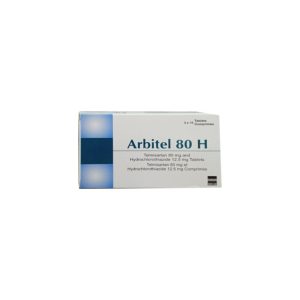
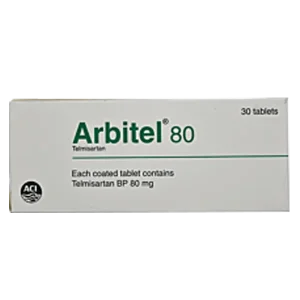
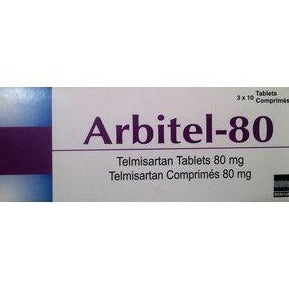
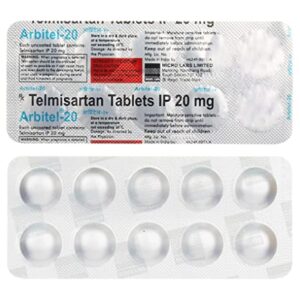
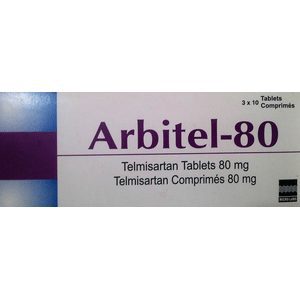 Arbitel (Telmisartan 80mg Tablets: Arbitel (Telmisartan 80mg Tablets
Arbitel (Telmisartan 80mg Tablets – request current price on allschoolabs.com
₦5,630.00 -

-
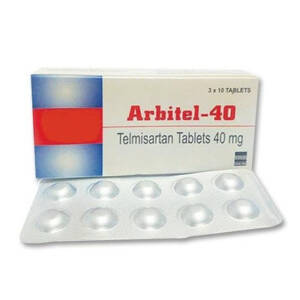
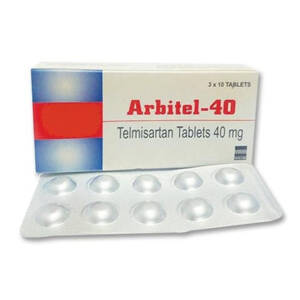
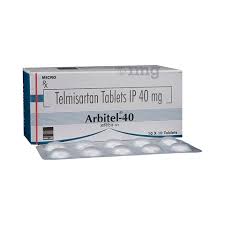
 Arbitel (Telmisartan) 40mg Tablets: Arbitel (Telmisartan) 40mg Tablets
Arbitel (Telmisartan) 40mg Tablets – request current price on allschoolabs.com
₦4,500.00 -
 Arbitel 40mg Tablets 30?s .This is a drug used to treat high blood pressure and heart failure. It is also effective in preserving kidney function in patients with diabetes. The composition of Arbitel 40mg Tab belongs to the angiotensin receptor inhibitors group of medicines, which prevents blood vessels from narrowing down. It improves blood flow and reduces blood pressure. Uses of Arbitel 80mg Tab Chronic heart failure Heart attack that has caused dysfunction of the lower left chamber of the heart High blood pressure Diabetic kidney disease
Arbitel 40mg Tablets 30?s
₦1,500.00

 No products in the cart.