


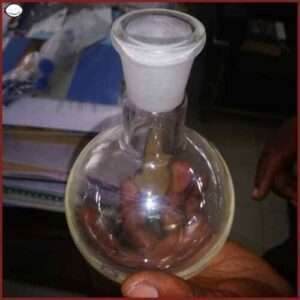
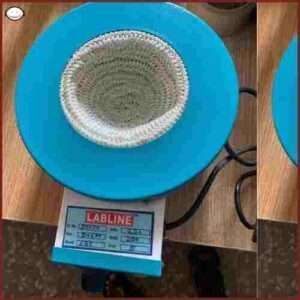
Instrument for distillation and boiling processes, for the uniform scalding of the substances contained in it, for sweeping substances, among other uses. Basic laboratory material for schools, colleges, and universities.
Made of borosilicate glass 3.3 according to DIN 12347, ISO 4797 and USP standard.
General properties of borosilicate glass 3.3
This glass is distinguished by its very good chemical resistance to water, salt solutions, acids, bases and organic solvents. It is only attacked by hydrofluoric acid and, at high temperatures, by strong bases and phosphoric acid.
Chemical composition
80.00% Silica; SiO2
12.50% Boron trioxide; B2O3
2.40% of Aluminium oxide; Al2O3
3.80% of sodium oxide; Na2O
1.00% of potassium oxide; K2O
0.30% of iron oxide; Fe2O3
Chemical resistance
Hydrolytic according to DIN 12111 and ISO 719: Class 1
Acid-resistant according to DIN 12116: Class 1
Alkaline according to DIN 52322 and ISO 695: Class 2
Physical properties:
Coefficient of linear expansion: 3.3
Processing temperature: 534? C
Upper annealing temperature: 550? C
Lower annealing temperature: 494? C
Maximum working temperature: 500? C






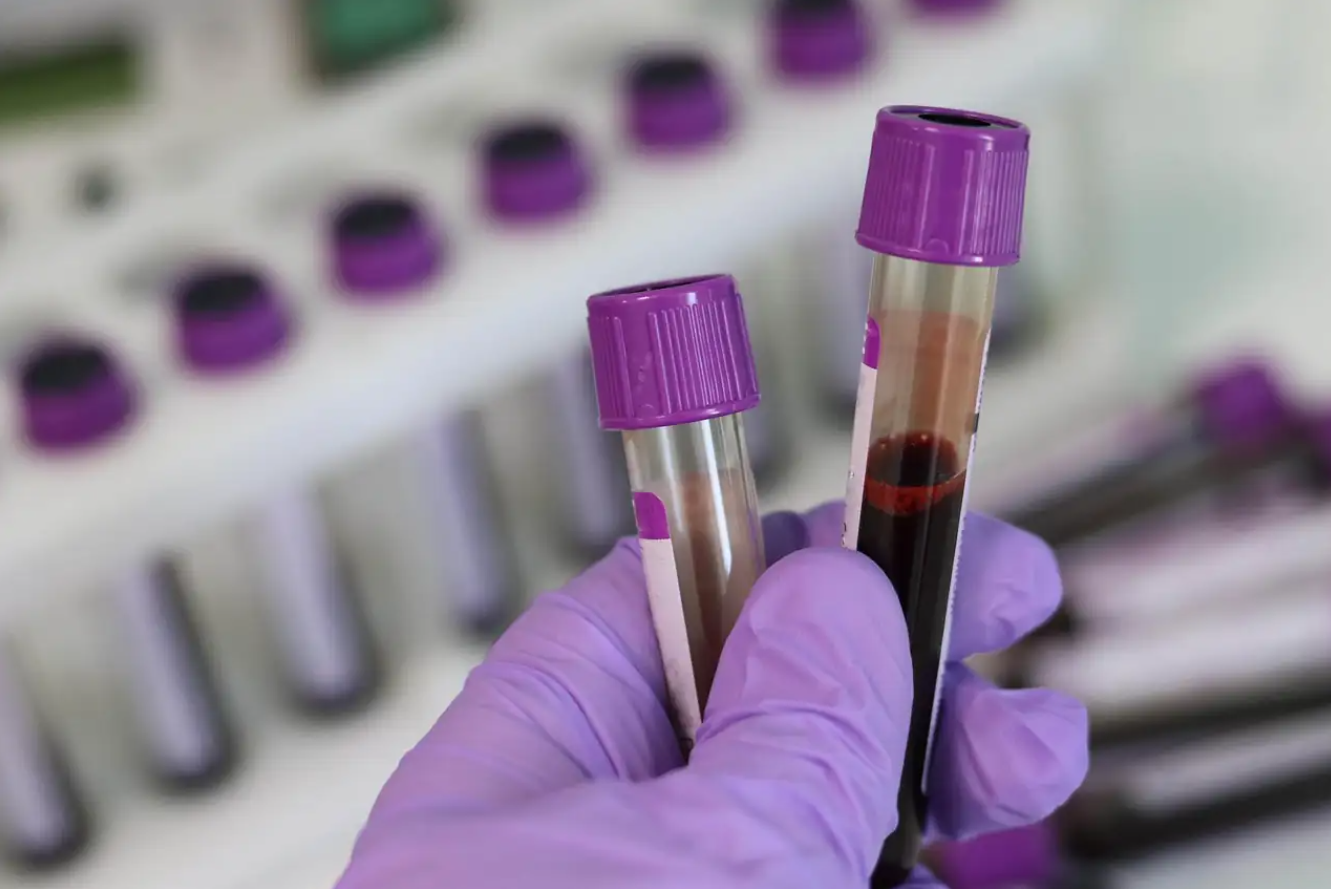
![ANTI D TITRE – [Serum]](https://app.analysisafrica.com/backend/uploads/tests/images/1754385122_6891cae238432.jpg)




 No products in the cart.