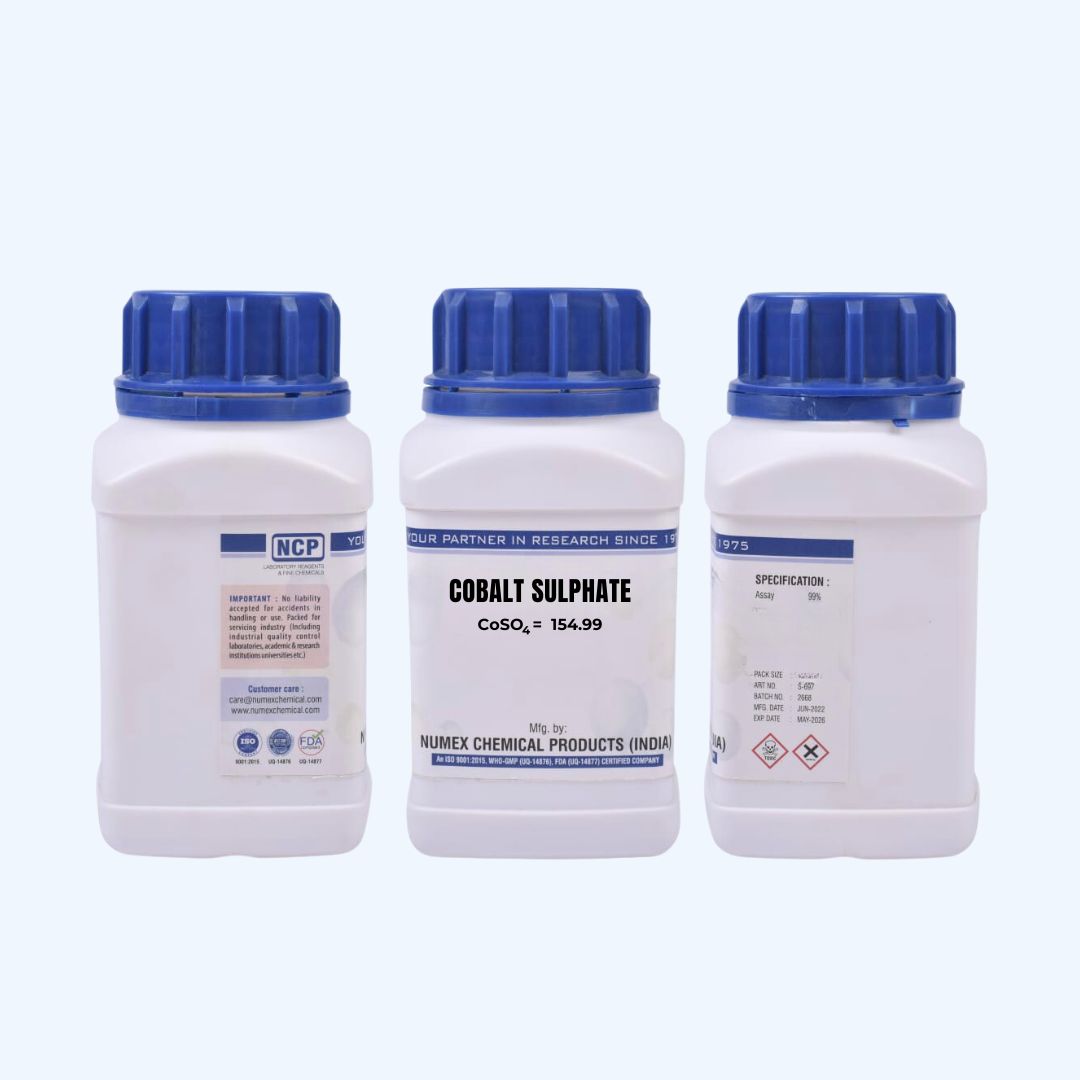
Cobalt Sulphate (100 gm) is a premium-quality chemical compound extensively used in laboratories and industrial applications. It is a key reagent in electroplating, as well as in the manufacture of pigments, catalysts, and batteries. Known for its stability and effectiveness, Cobalt Sulphate is a reliable choice for researchers and manufacturers alike. The high-purity formula ensures consistent results, making it a must-have for various scientific applications.
Key Features
High-purity Cobalt Sulphate ideal for laboratory use.
Reliable and stable for electroplating, pigments, and catalyst applications.
Ensures consistency and precision in laboratory experiments.
Used in manufacturing batteries and other cobalt-based materials.
Packed in a secure, easy-to-use 100 gm container for convenience.
Precautions
Handle with care to avoid inhalation or skin contact.
Store in a cool, dry place away from incompatible substances.
Wear protective gloves and goggles when using Cobalt Sulphate.
Avoid ingestion; keep out of reach of children.
Dispose of the chemical properly according to local regulations.
Frequently Asked Questions (FAQs)
Question: What is the primary use of Cobalt Sulphate?
Answer: Cobalt Sulphate is primarily used in laboratory experiments, electroplating, and manufacturing cobalt-based products such as pigments and batteries.
Question: How should Cobalt Sulphate be stored?
Answer: It should be stored in a cool, dry place away from incompatible substances to maintain its purity and stability.
Question: Is Cobalt Sulphate safe to handle?
Answer: While Cobalt Sulphate is commonly used in laboratories, it should be handled with care. Always wear protective gloves and goggles to prevent direct contact.
Question: Can Cobalt Sulphate be used in battery production?
Answer: Yes, Cobalt Sulphate is an important raw material used in the production of rechargeable batteries, especially lithium-ion batteries.
Question: What precautions should I take when using Cobalt Sulphate?
Answer: It?s essential to avoid inhalation or direct contact with skin. Wear protective gear and store it properly in a safe environment.









![ANTI D TITRE – [Serum]](https://app.analysisafrica.com/backend/uploads/tests/images/1754385122_6891cae238432.jpg)


 No products in the cart.