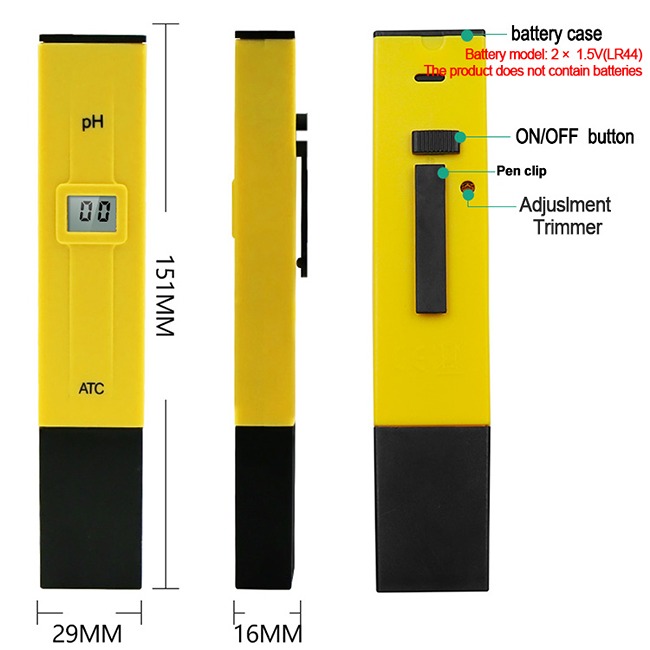
Digital pH Meter
Description
A Digital pH meter is used to measure the acidity/alkalinity of a solution. The level of acidity/alkalinity is expressed as pH level, which generally ranges from 1 to 14.
This pH measurement is directly related to the ratio of hydrogen ion concentration and hydroxyl ion concentration ([H+] and [OH–], respectively). The following are the pH levels:
- Neutral solution: pH = 7
- Acidic solution: pH < 7
- Basic solution: pH > 7
A neutral solution will show a pH of 7 on a Digital pH meter due to the equal activities of hydrogen and hydroxide ions. Acidic solutions exhibit pH readings below 7 (higher hydrogen ion activity compared to hydroxide ion activity), and basic (or alkaline) solutions exhibit pH levels above 7 (hydroxide ion activity is greater than that of hydrogen ion).
Digital pH meters are widely used in the following industries:
- Food & beverage
- Pharmaceutical
- Oil & gas
- Agriculture
- Water treatment plant
This is not the total list of all of its areas of application.














![ANTI D TITRE – [Serum]](https://app.analysisafrica.com/backend/uploads/tests/images/1754385122_6891cae238432.jpg)

















 No products in the cart.