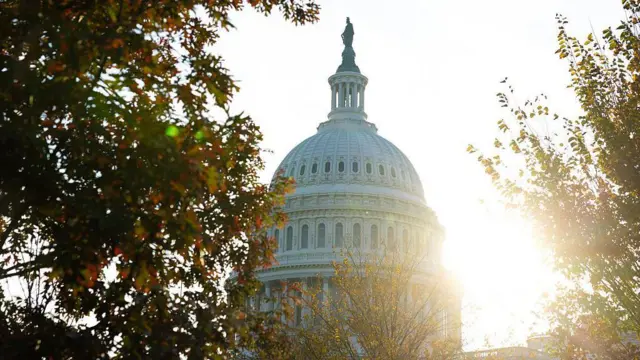
Government Shutdown update
- The United States Senate on November 10 advanced a compromise bill to fund government operations through January 30, 2026, representing a potential end to the Government shutdown.
- Agreement came after eight Democratic senators joined Republicans to break through legislative gridlock.
- Despite the progress, it still needs approval in the United States House of Representatives and must be signed by the President to take effect.
- In parallel, several federal agencies face severe staff disruptions:
- The Internal Revenue Service has furloughed nearly half its remaining workforce.
- The Federal Aviation Administration has ordered flight reductions of up to 10% at major airports due to staffing shortfalls.
What’s driving the shutdown
- The shutdown began because Congress failed to pass annual appropriations legislation by the October 1 start of the fiscal year.
- Major disagreement centres on:
- Continuation of funding for millions of federal workers and agencies
- Extension of health-insurance subsidies under the Affordable Care Act (ACA)
- Broader spending priorities and control over discretionary funds.
How the Government Shutdown affects everyday Americans
- Federal workers: Around 900,000 workers may be furloughed, while many others are working without pay until funding resumes.
- Travel & airports: With the FAA’s capacity cuts, expect flight delays, cancellations and airport disruption at major hubs.
- Public-benefit programs: Programs like the Supplemental Nutrition Assistance Program (SNAP) and the Women, Infants, and Children (WIC) Program have been placed at risk of reduced payments or delays.
ADS: Shop from 400,000+ Cheap Products
-

Hydrochloric acid
₦9,000.00 -

Pregnacare Before Conception 30 Tablets
₦22,704.00 -

3 Neck Boiling Flask 500ml
₦6,000.00 -

XRF Analysis
₦7,000.00
Why this matters
- A prolonged shutdown means greater economic damage: missing paychecks, delayed services, reduced confidence.
- Agencies that support public health, veteran affairs and national security are stretched, which can have long-term consequences.
- Politically and socially, the shutdown tests federal responsibility, trust in institutions, and the ability of Congress to govern.
What to watch next
- House vote: If the House passes the funding bill quickly, the shutdown may end soon.
- Presidential signature: The funding legislation must be signed into law to take effect.
- Implementation details: Even after a deal, rehiring furloughed workers and restoring agency operations will take time.
- Healthcare subsidies: Democrats have signalled they’ll press for ACA subsidy extensions later; this could become a next fight.
- Economic metrics: Look for reports on consumer spending, unemployment for federal workers, and overall GDP impact.
Happening Now!!!
- Where to Buy Laboratory Equipment Online in Nigeria (2026 Best Trusted Suppliers)
- Nigeria Travel Restrictions: What’s Really Going On and What Travelers Need to Know.
- Ukraine Claims Underwater Drone Attack on Russian Submarine in Black Sea Port
- Aisha Buhari Trends Online: Why Her Recent Comments Have Nigerians Talking
- Best Buy 2025: What’s New


 No products in the cart.