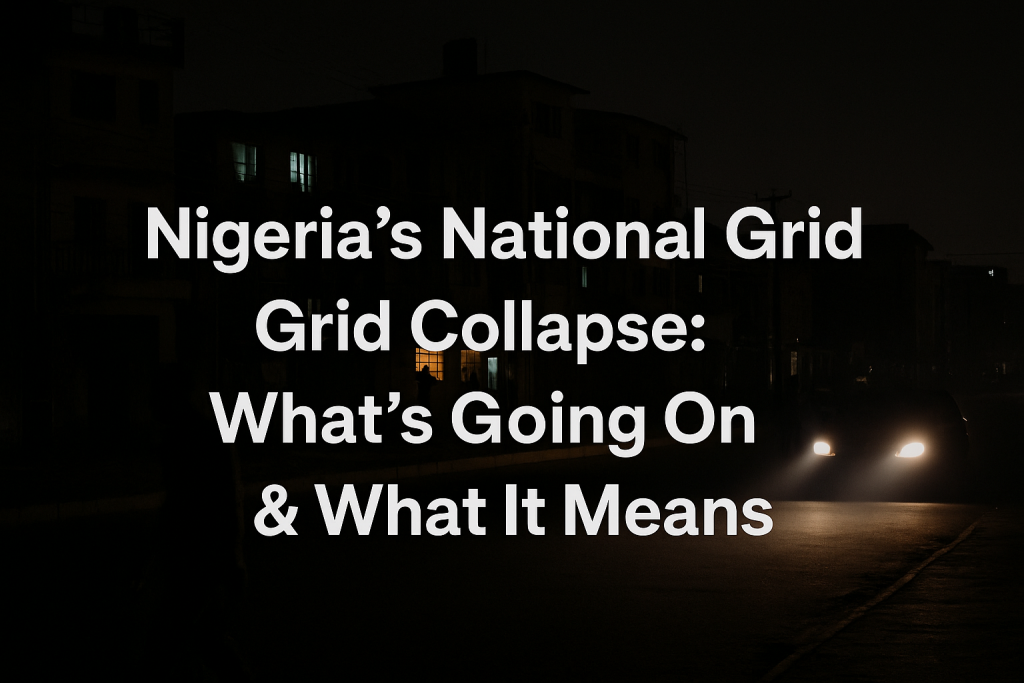
Nigeria is once again plunged into darkness. On September 10, 2025, the national power grid collapsed following the tripping of a generating company (GenCo), sending electricity generation plummeting from around 2,917.83 MW to just 1.5 MW in one hour. The collapse spread rapidly, affecting homes, businesses, public facilities — the consequences were immediate and widespread.
What Caused the Collapse
- The independent system operator, NISO (National Independent System Operator), attributed the outage to a GenCo tripping — one power generating unit went out, triggering cascading failures in others – according to TVC news
- The drop in MW was dramatic: from nearly 3,000 MW to barely 1.5 MW within the span of an hour.
- Restoration efforts began swiftly, with Shiroro hydropower plant being used to supply Abuja first. Officials say “substantial restoration” has been achieved across many regions.
Impacts on People and Economy
- Households: Lights, fans, refrigerators — daily activities come to a halt. For many Nigerians, power outages mean shifting to generators which cost more and often run on fuel that is expensive or difficult to obtain.
- Businesses & Services: Offices, shops, hospitals, and schools all suffer. Critical equipment fails, operations are disrupted, and productivity drops.
- Economy: Frequent blackouts discourage investment, raise costs of doing business, and make planning difficult. Industries rely on consistent power; instability increases input cost and can force reduction or suspension of operations.
Why This Keeps Happening
There isn’t one single cause — it’s a confluence of systemic issues:
- Aging Infrastructure & Poor Maintenance
Many power plants, transmission lines, substations are old; parts are overused or in disrepair. When one component fails, others follow in “domino effect.” - Insufficient Generation Capacity vs Load Demand
Even on good days, Nigeria often produces far below what it could or should, given its population and economic activity. Load demand often outstrips reliable supply. - Technical Faults & Tripping
Generators or parts of them sometimes trip (i.e. shut off) because of faults, overload or instability. Once one GenCo trips, the disturbance can cascade. - Regulatory & Governance Gaps
Delays, underfunding, weak oversight, unclear responsibilities among GenCos, DisCos (Distribution Companies), Transmission Company of Nigeria (TCN), and operators like NISO. - Funding & Debt Issues
Many power firms are under financial stress. Debts owed to generating companies, delayed payments, and subsidy burdens weigh heavily. Upgrades and maintenance are expensive and often delayed – Reuters
ADS: Products you may like
-

Hydrochloric acid
₦9,000.00 -

Pregnacare Before Conception 30 Tablets
₦22,704.00 -

3 Neck Boiling Flask 500ml
₦6,000.00 -
XRF Analysis
₦7,000.00
What’s Being Done & What Needs to Be Done
On the positive side:
- Operators like NISO have started investigations to find root causes so future collapses might be prevented. Trending News
- Restoration efforts have been fairly fast, often beginning from reliable plants (like hydropower) and spreading out. Reuters+1
But much more is needed:
- Upgrade Infrastructure: Replace old transmission lines, substations, upgrade generator units.
- Improve Coordination: Between GenCos, DisCos, TCN, and NISO so that system disturbances are quickly managed or preempted.
- Increase Investment: More funding for renewable sources, grid-scale storage, modern power plants, and maintenance budgets.
- Regulatory Reforms: Clear accountability, better oversight, penalties for non-performance, and incentives for reliability.
- Alternative & Distributed Power Sources: Solar, mini-grids, embedded generation might help take load off national grid during crises.
What Nigerians Can Do Now
While structural fixes are long-term, there are steps that citizens and businesses can take now to ease the pain:
- Use generators or inverters where feasible; invest in solar with battery backups.
- Plan for outages (e.g. avoid scheduling critical tasks that require uninterrupted power).
- Demand better service and transparency from DisCos and relevant authorities; stay informed.
- Support/research alternative energy options, especially community and localized generation systems.
Conclusion
Nigeria’s power grid collapse on September 10 is a stark reminder of longstanding vulnerabilities in the country’s power sector — from technical faults and aging infrastructure to regulatory and financial challenges. While restoration is underway and many lives will return to normal, this latest blackout should spur stronger reforms and investments. The cost of inaction is growing, both for citizens and the economy.
Nigeria deserves a power system that’s reliable, resilient, and fair — not just in theory, but in everyday life.
Related News


 No products in the cart.